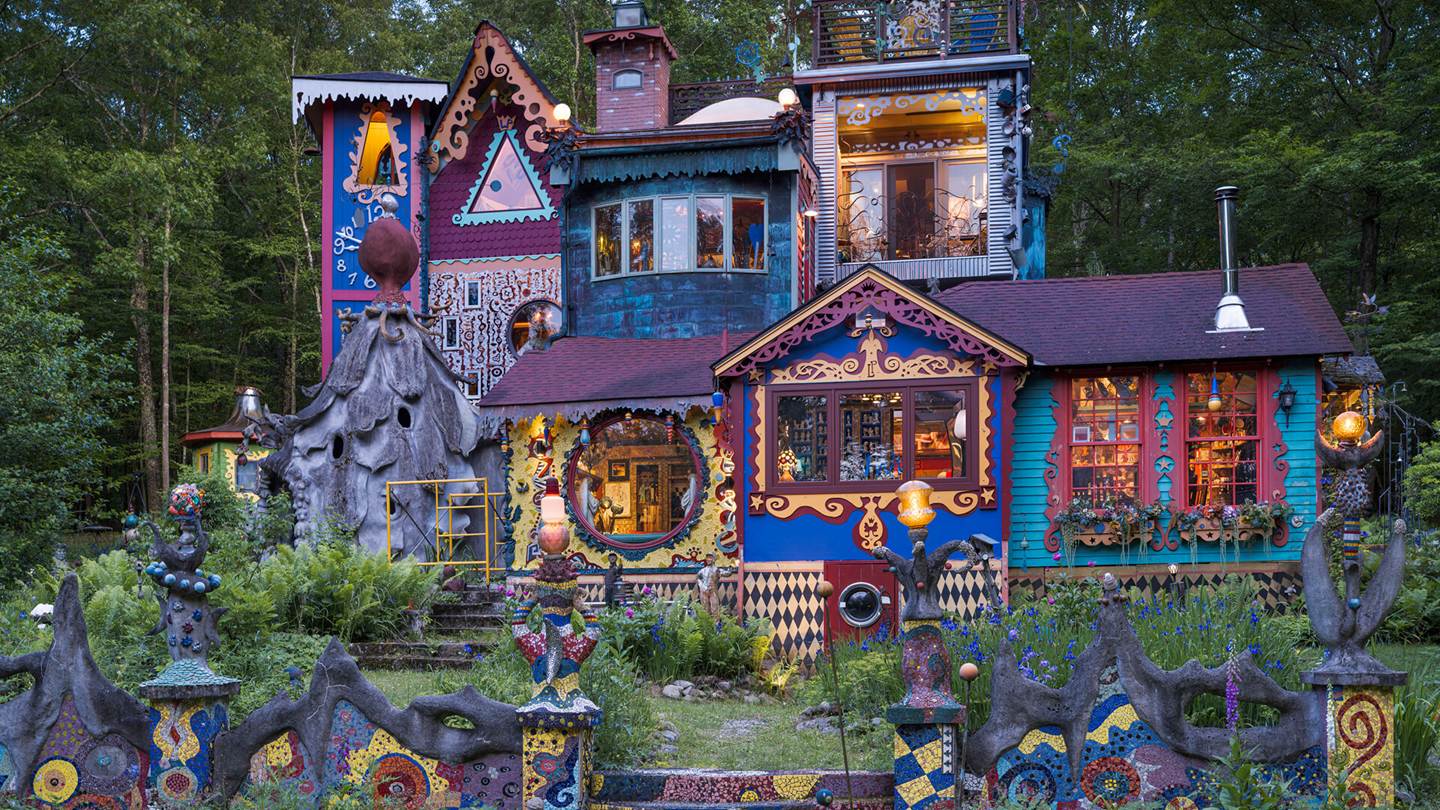
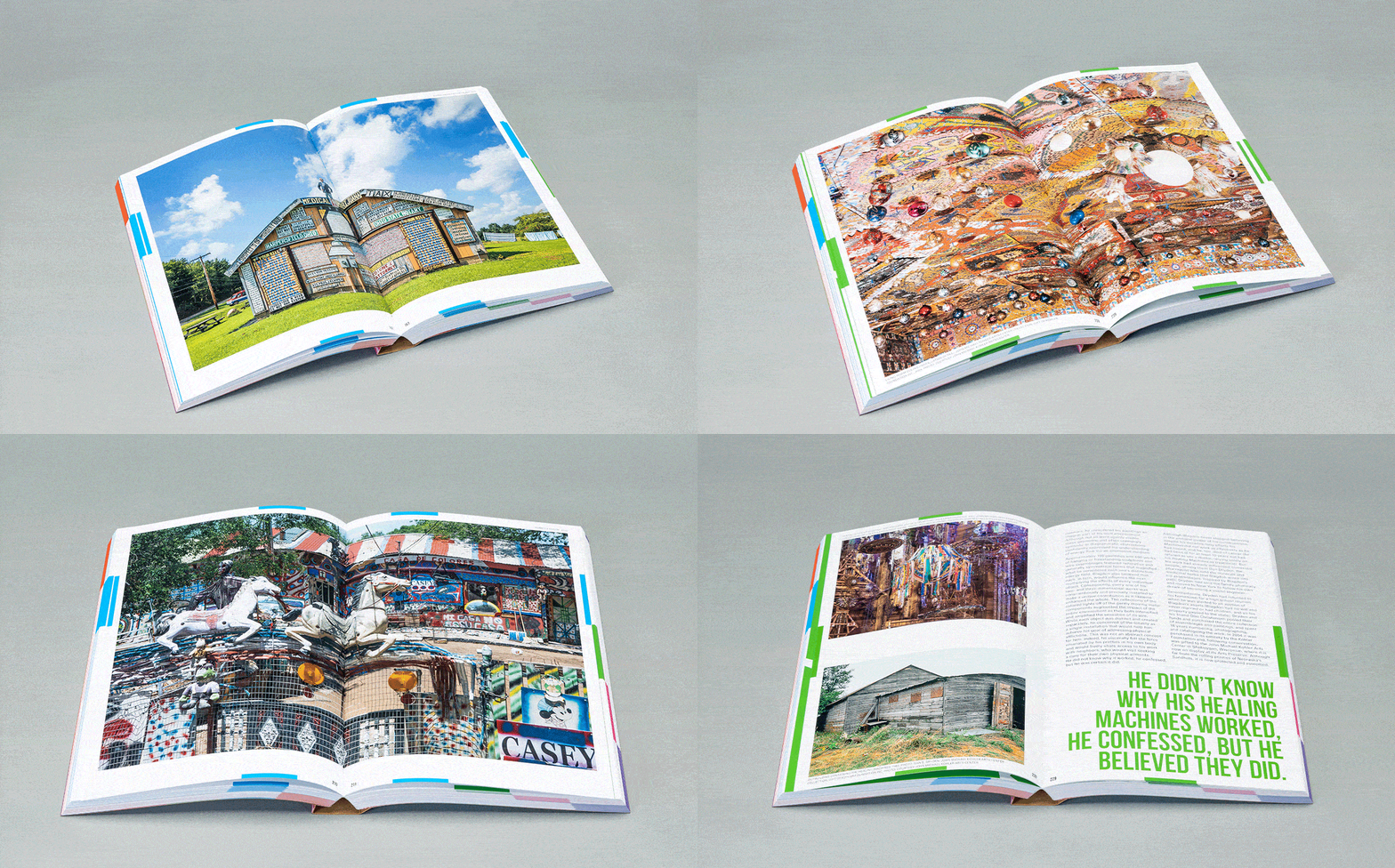
All across the United States, self-taught artists and architects, working outside of the mainstream, unite function with fantasy. The works are generally monumental, frequently provocative, often whimsical, sometimes reverential, and regularly misunderstood–but always remarkable. This book, published by Tra Publishing in mid-2026, opens a window into the passion and the innovation of some of our most creative artists and the ways they transform the spaces in which they live and work.
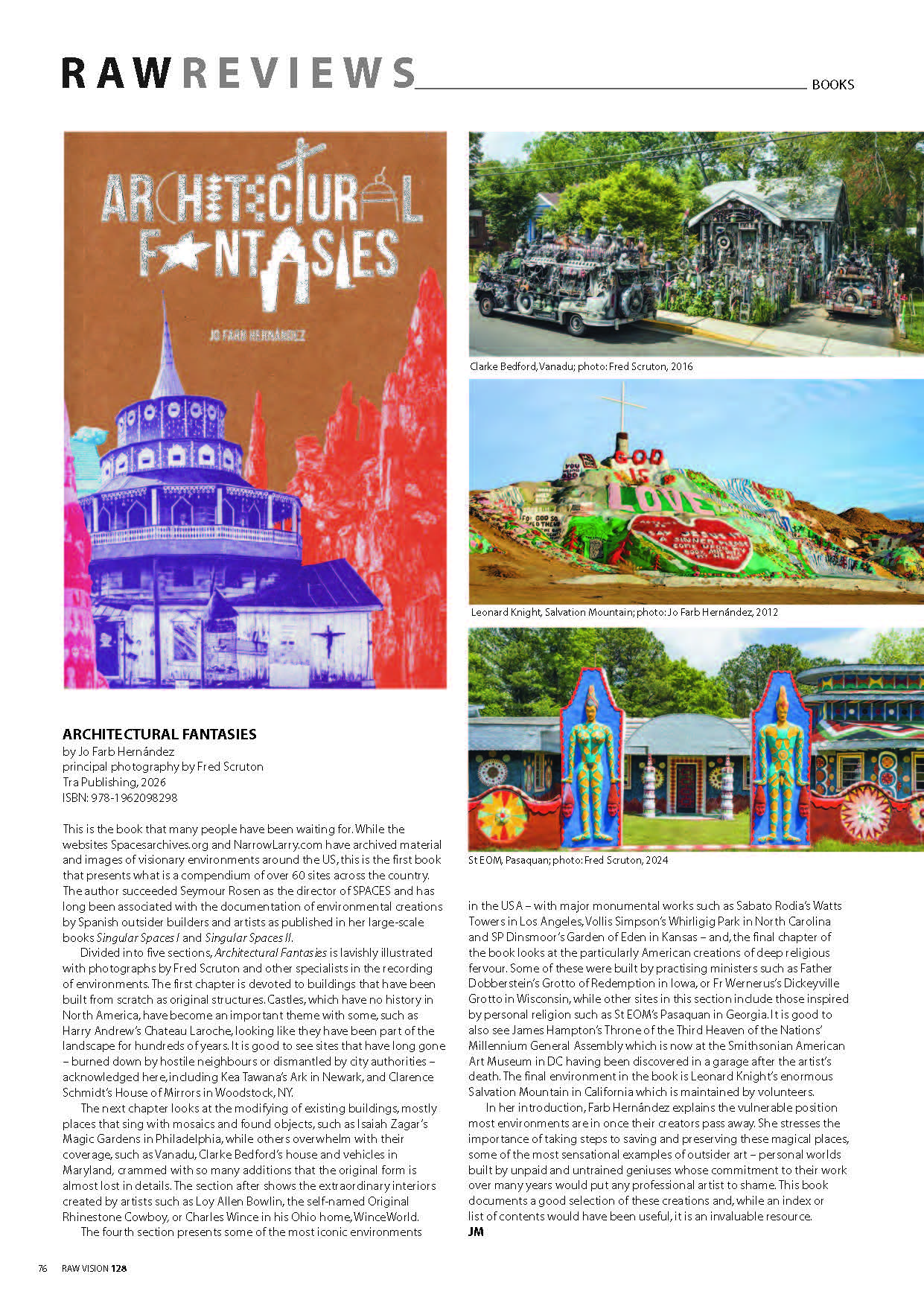
“This is the book that many people have been waiting for. [I]t is an invaluable resource.” –John Maizels, Raw Vision 128 (Autumn 2026)
“Jo Farb Hernándezbrings a depth of knowledge to the multidimensional field of artist-built environments in her exceptional Architectural Fantasies.” –BookPage, April 2026
A “vibrant volume….Hernández champions these individualistic works as monumental exemplars of the vast potential and wonderful weirdness of the human imagination.” — Kate Mothes, Colossal
“Tra Publishing’s new title by Jo Farb Hernández surveys 60+ self-built ‘art environments’ across the US, where creativity, improvisation and whimsy expand the architectural canon.” — Jincy Iype, StirWorld
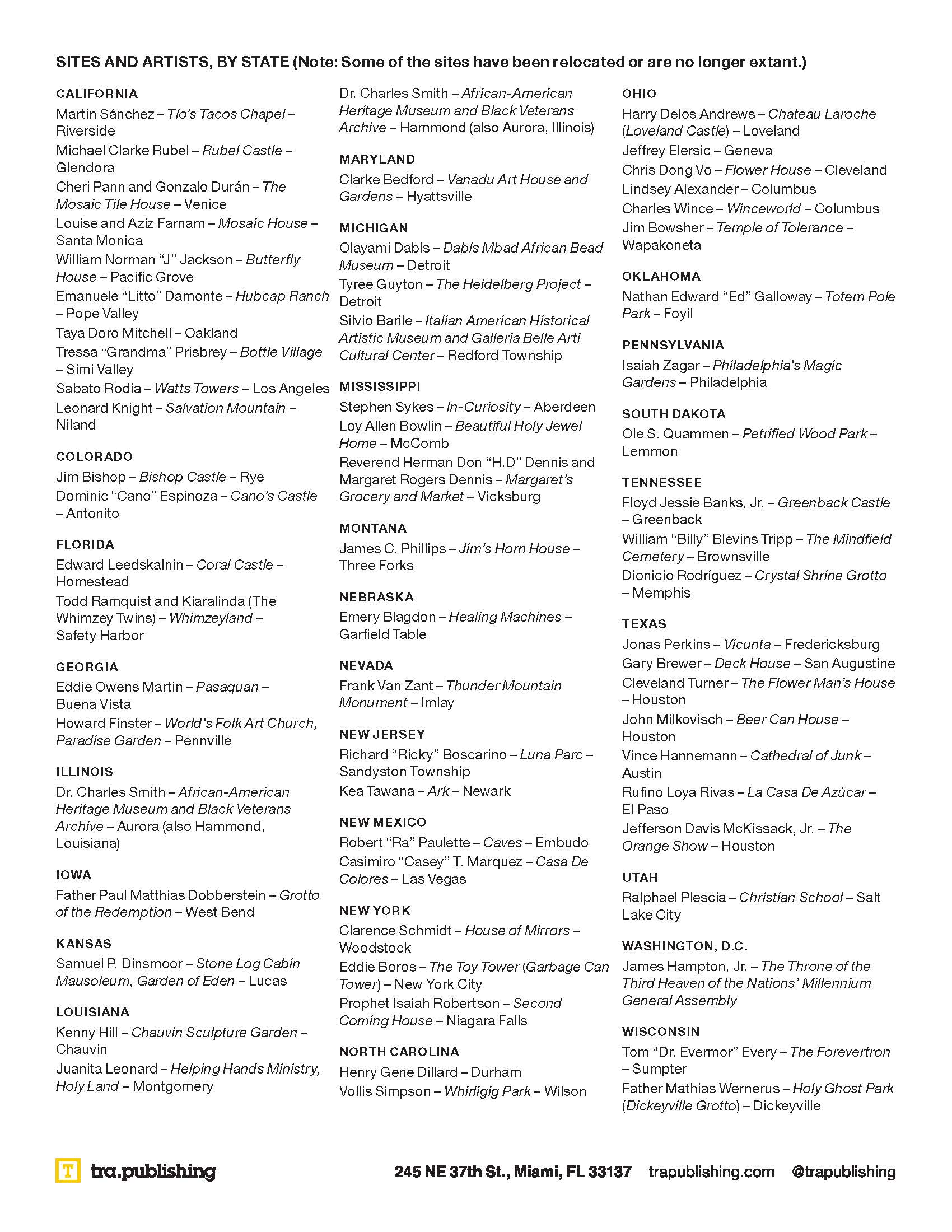
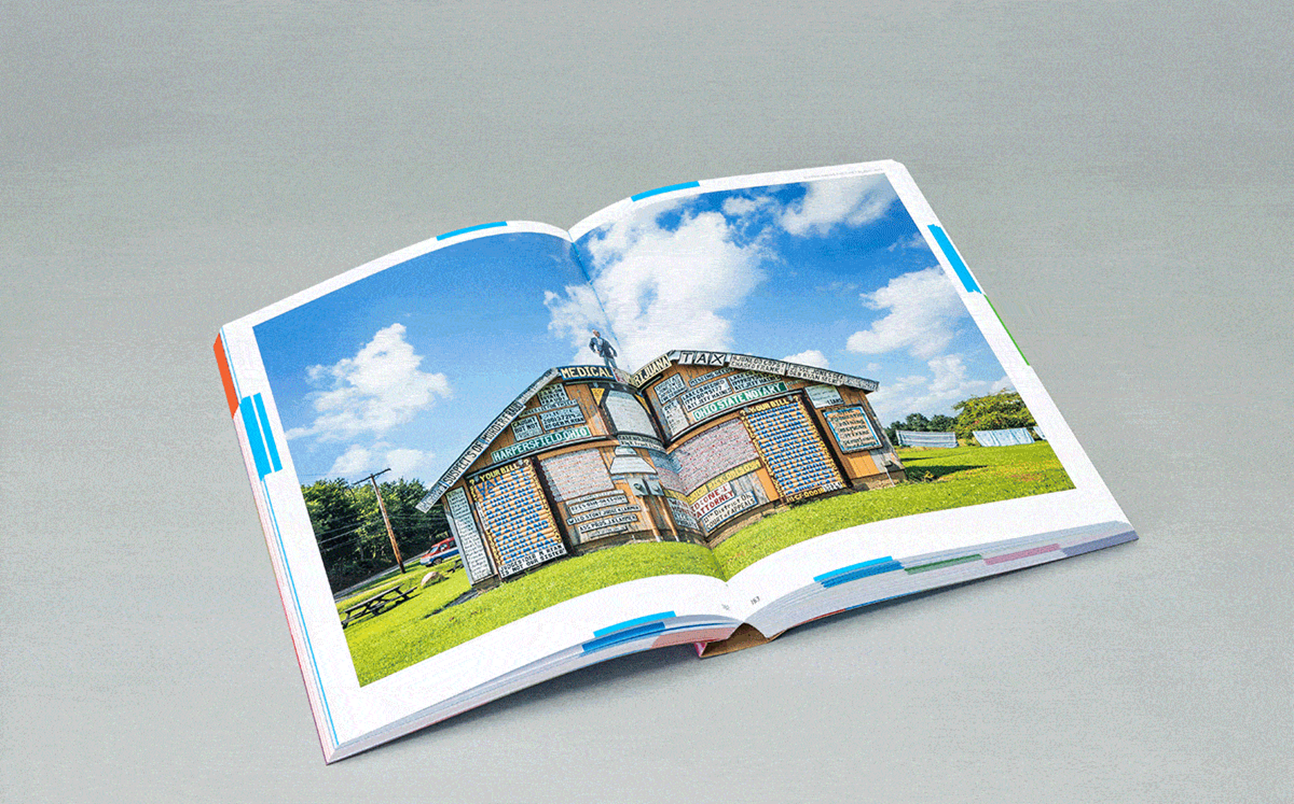
Margaret Rogers Dennis, Margaret’s Grocery and Market, Vicksburg, Mississippi. Photos by Fred Scruton.
All images courtesy of Jo Farb Hernández and Tra Publishing, shared with permission
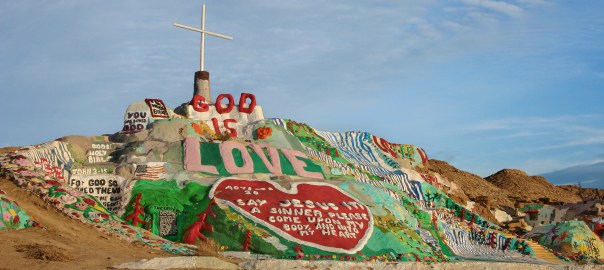
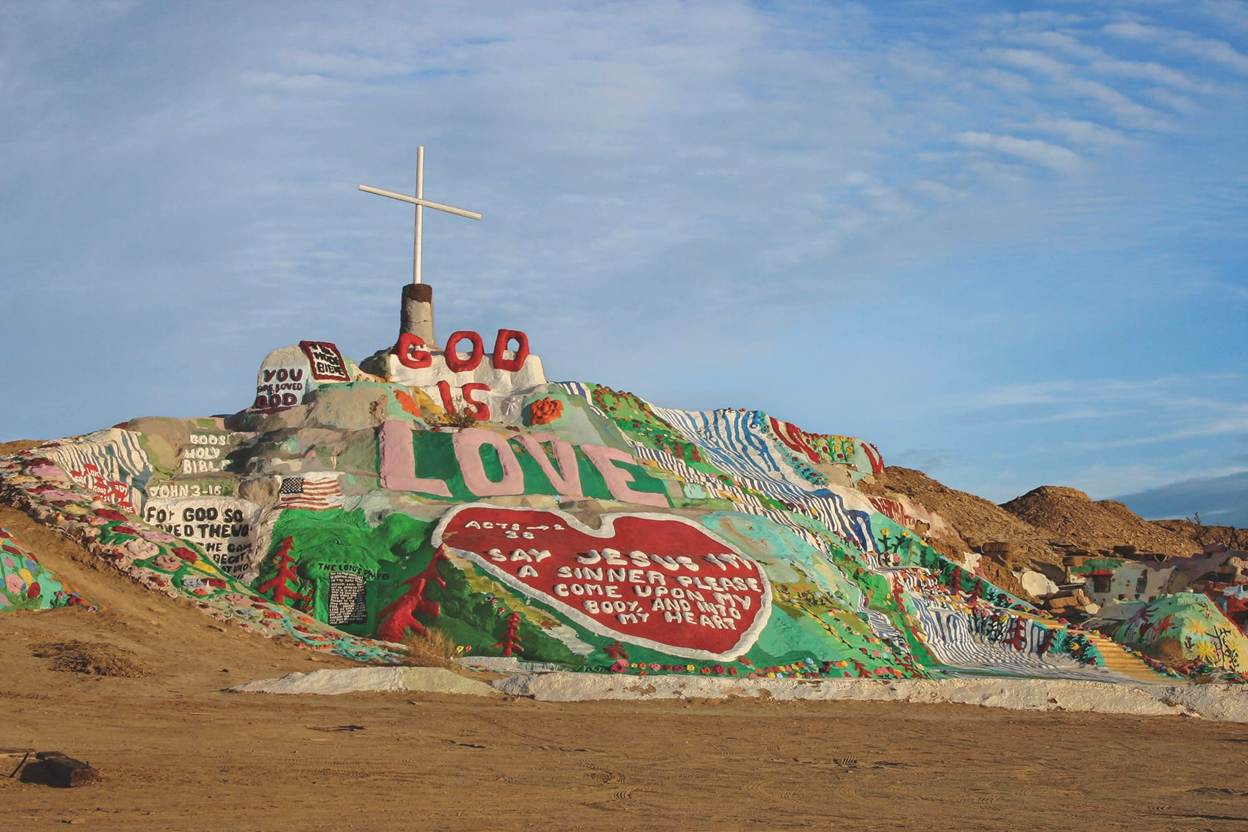
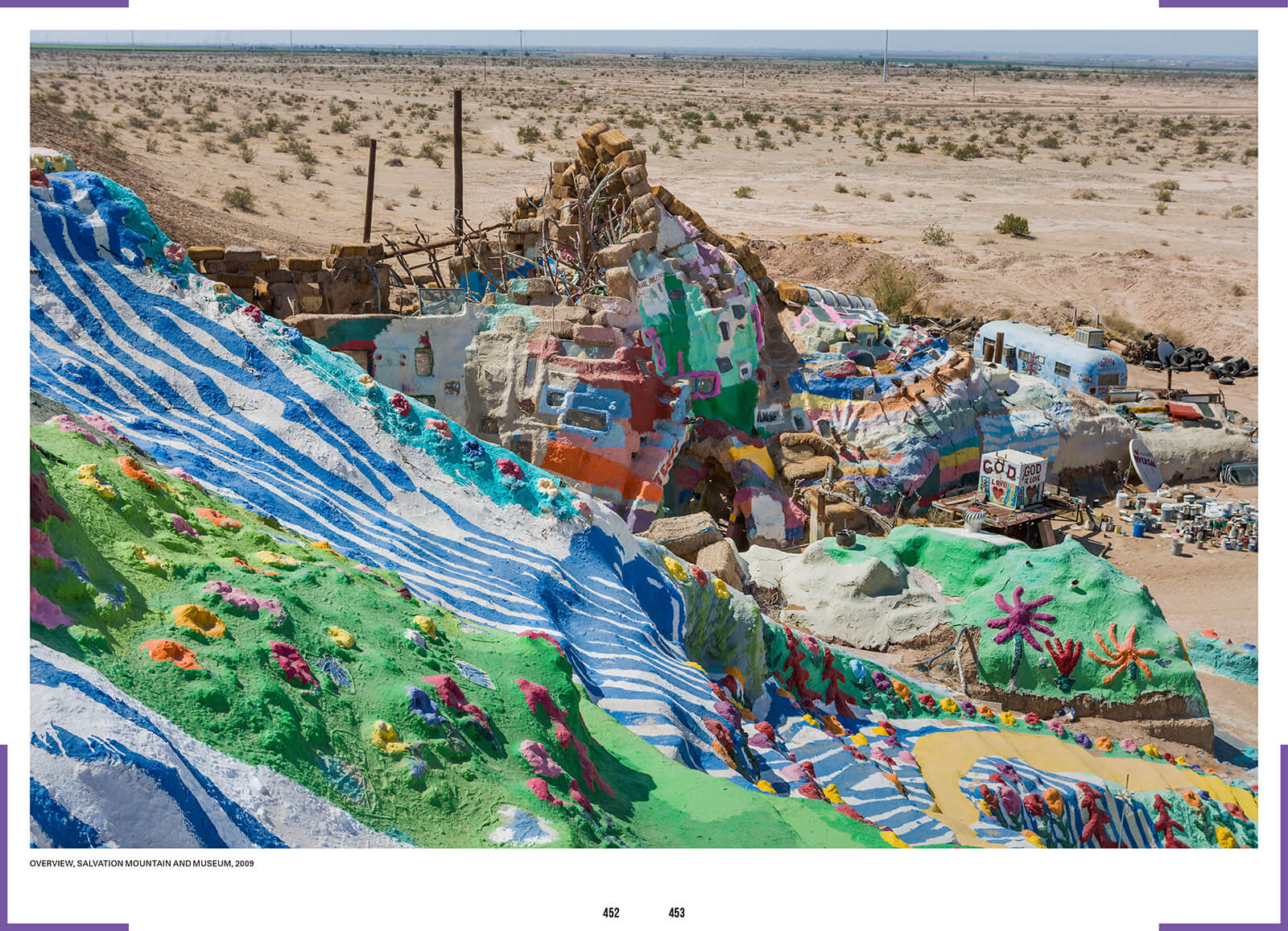
What began as a pile of dirt, rubble, and cement in rural Niland, California, just east of the Salton Sea, eventually became one of the most beloved landmarks and roadside attractions in the region. “Salvation Mountain,” Leonard Knight’s vibrantly painted, three-story mound made of adobe and straw, stands as a tribute to one man’s tenacity and desire to spread a message, topped with its instantly recognizable slogan, “God Is Love.”
“Salvation Mountain” is just one of countless artist environments around the U.S., illustrating the unique style, drive, and vernacular of creative builders. Often driven by religious or spiritual fervor, these self-taught artists use whatever materials are at hand, from salvaged metal and concrete to rocks, shells, glass, and more. Northern Wisconsin artist Fred Smith, for example, built a sprawling “Wisconsin Concrete Garden” that’s populated by figures and animals embellished with fragments of beer bottles and other found objects. And Philadelphia’s Magic Gardens are a visual cacophony of mosaics, passageways, arches, and niches made from a huge array of materials and knick-knacks.
Leonard Knight, Salvation Mountain, Niland, California. Photo by Jo Farb Hernández, 2012
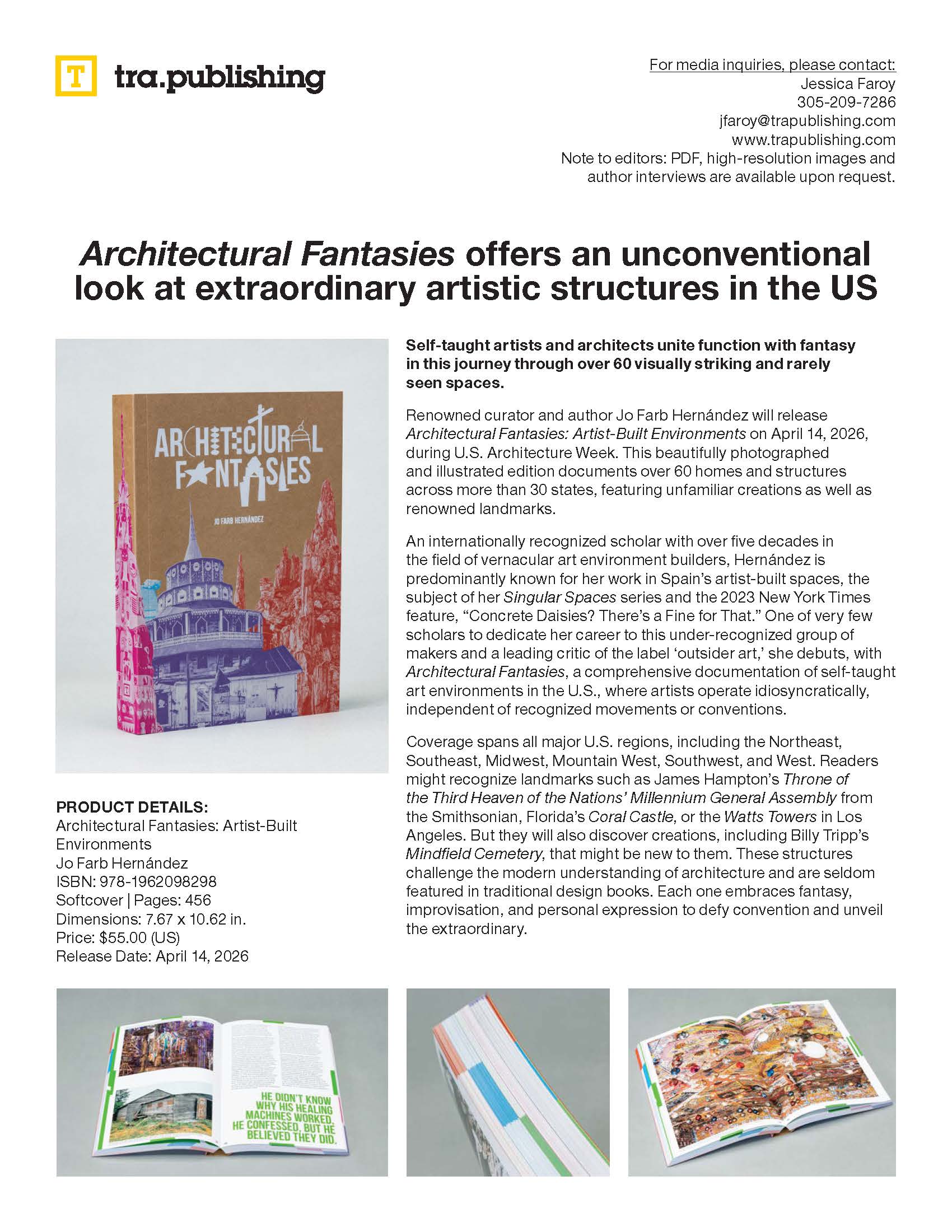
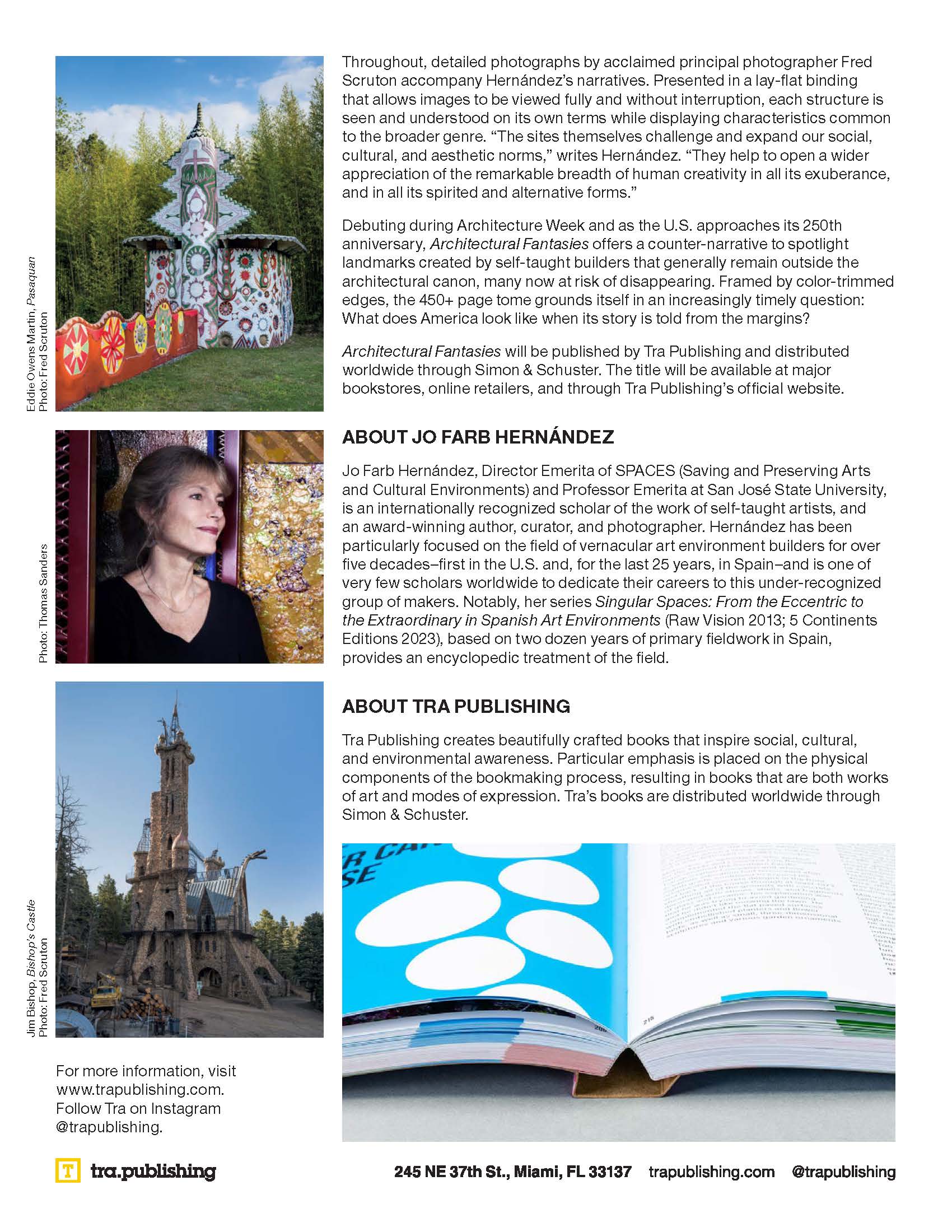
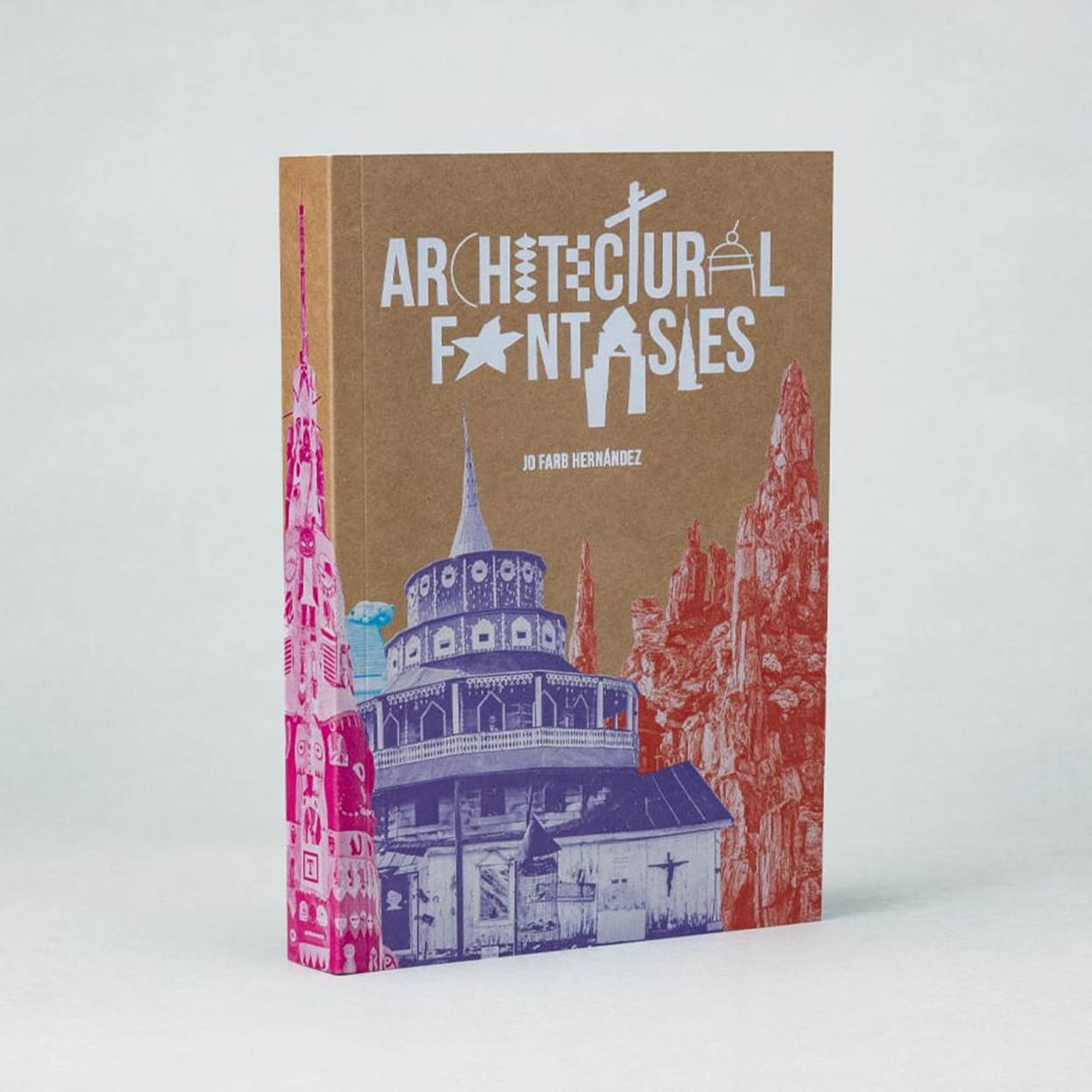
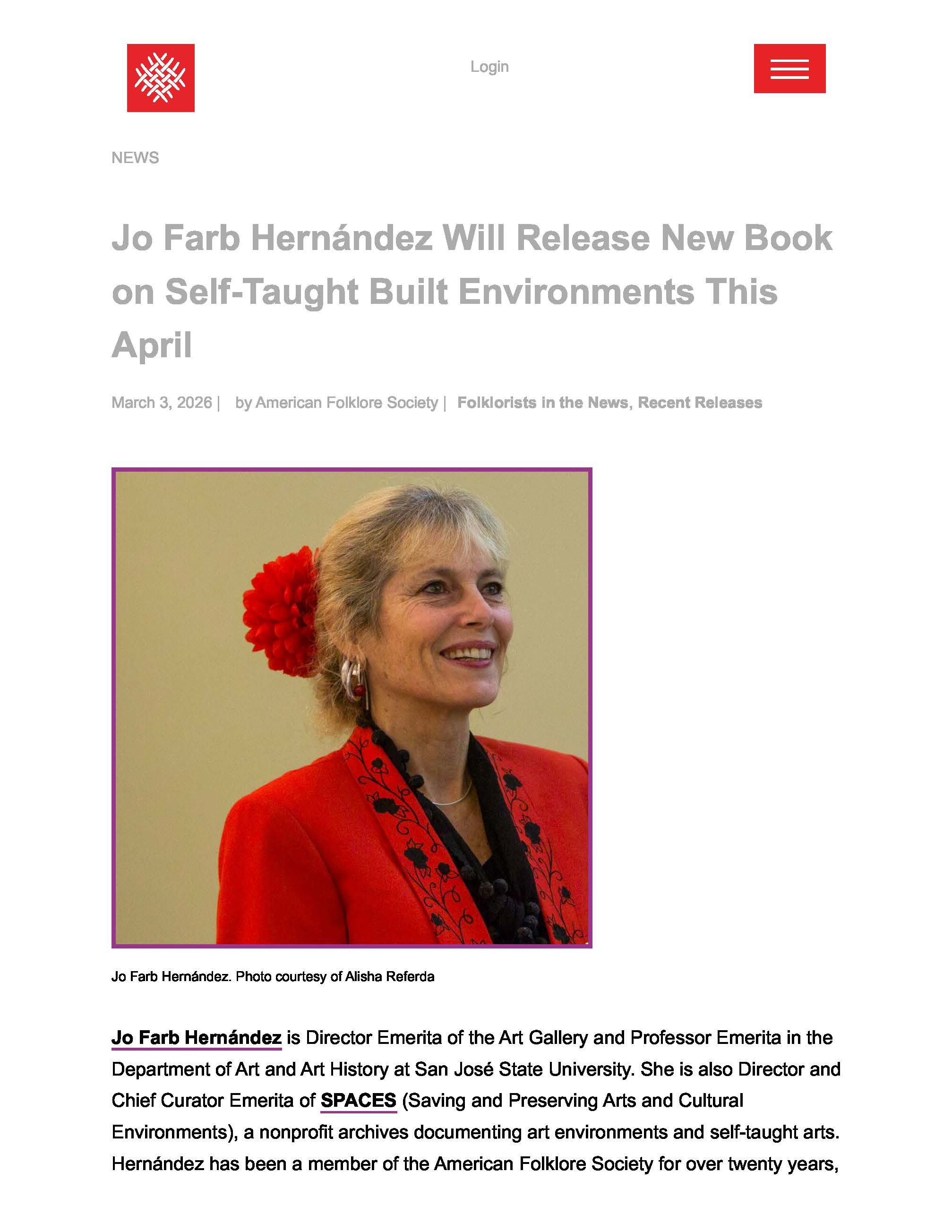
A new book forthcoming from Tra Publishing titled Architectural Fantasies: Artist-Built Environmentschronicles some of the most enduring examples of these vernacular treasures—even if they only now exist in photographs. The vibrant volume is authored by Jo Farb Hernández, Director Emerita of SPACES (Saving and Preserving Arts and Cultural Environments), whose work revolves around documenting and preserving one-of-a-kind, artist-constructed places.
Gathering decades’ worth of research and documentation, the book includes spectacular photographs by Fred Scruton and highlights the remarkable diversity of hand-built environments. Free from academic or architectural conventions, these buildings range from castle-like houses to folk art churches to intergalactic time travel machines—think Dr. Evermore’s Forevertron.
Thanks to enthusiasts and curators like Hernández who shine a light on these idiosyncratic creations, many have been carefully documented, catalogued, and conserved. Some have also been removed—at least in part—to museums, such as the John Michael Kohler Art Center’s Art Preserve in Sheboygan, Wisconsin. Many have been dismantled, typically after the owner-artist died or the family moved on from the property, while others are lovingly maintained and open to the public.
Often categorized as “outsider art,” which describes work made by people who are self-taught and encompasses much folk art, artist environments are truly their own genre. And Hernández has long criticized the label. Its implication that the work is less significant or worthy of study when compared to other “high” forms of art, such as academic painting and sculpture, disregards that its makers improvise and play by their own rules—and do so extremely independently.
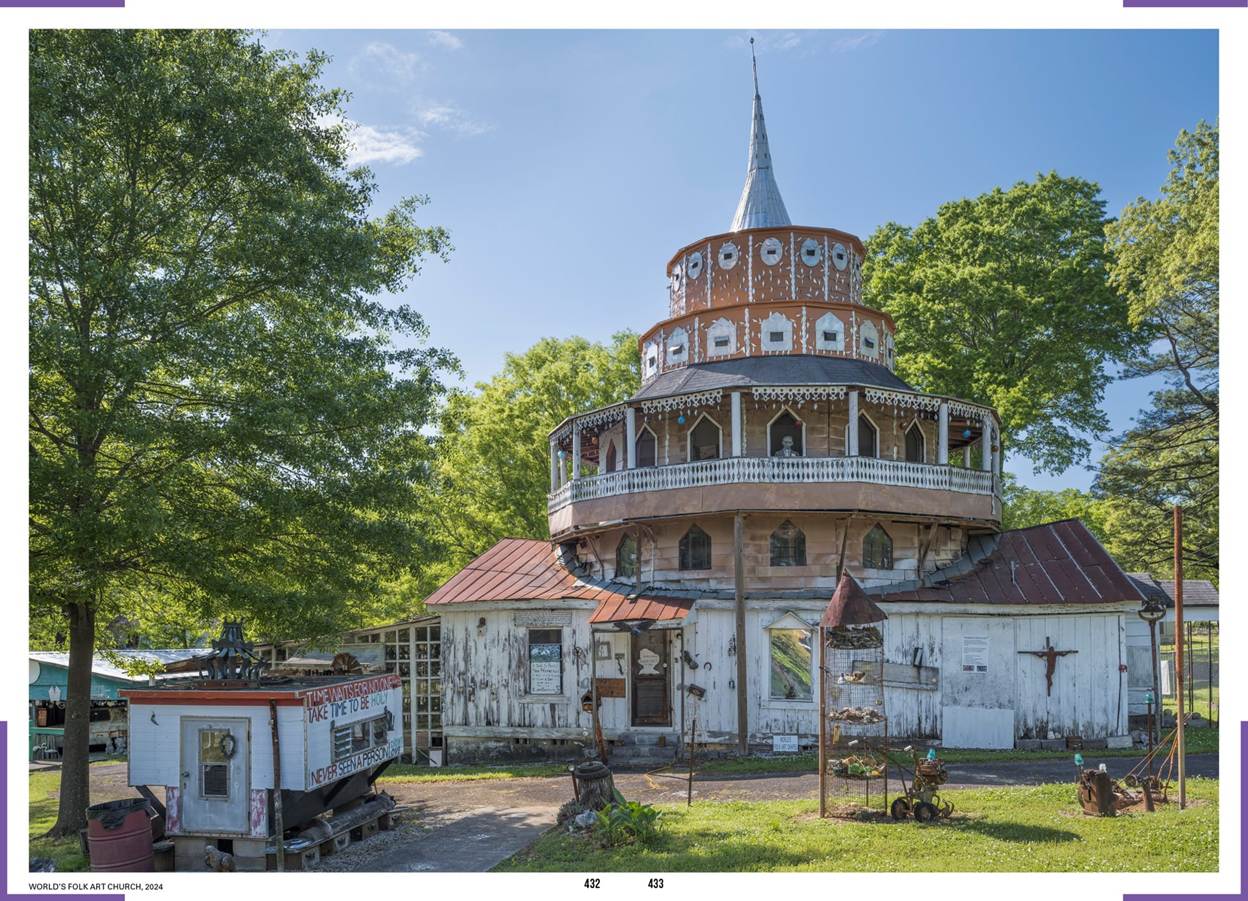
Howard Finster, World’s Folk Art Church, Paradise Garden, Pennville, Georgia
Hernández champions these individualistic works as monumental exemplars of the vast potential and wonderful weirdness of the human imagination. She says, “It is noteworthy how widespread stellar examples of this work are, and how, one by one, they push the envelope of the stale and rather archaic boundaries of the art historical canon.”
Architectural Fantasies is slated for release on April 14, and you can pre-order your copy in the Colossal Shop. You might also enjoy exploring artist environments that are part of the National Trust for Historic Preservation’s Historic Artists’ Homes and Studios program. And visit Ricky Boscarino’s whimsical, hand-built home in the short documentary “Electric Garden.”
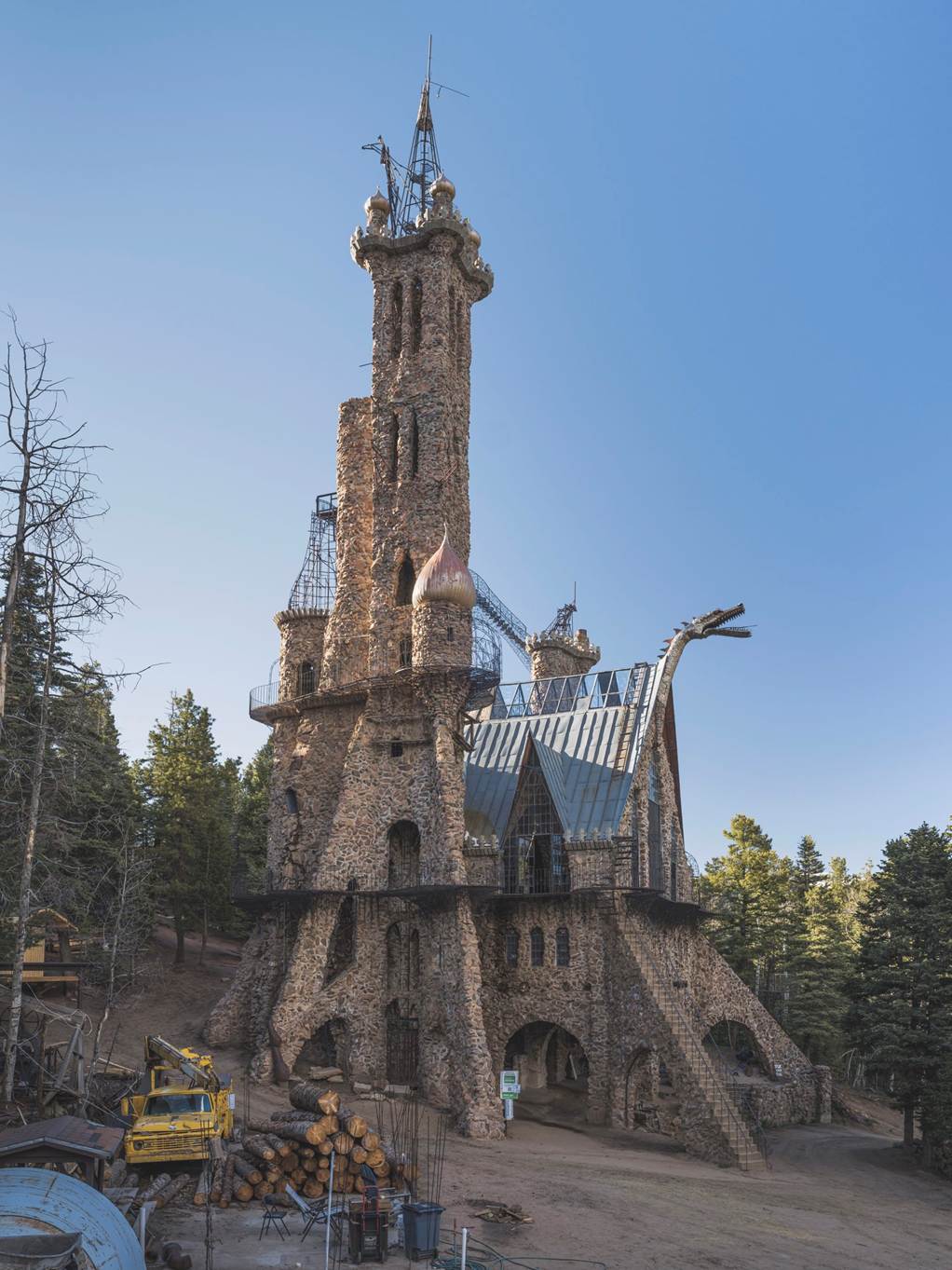
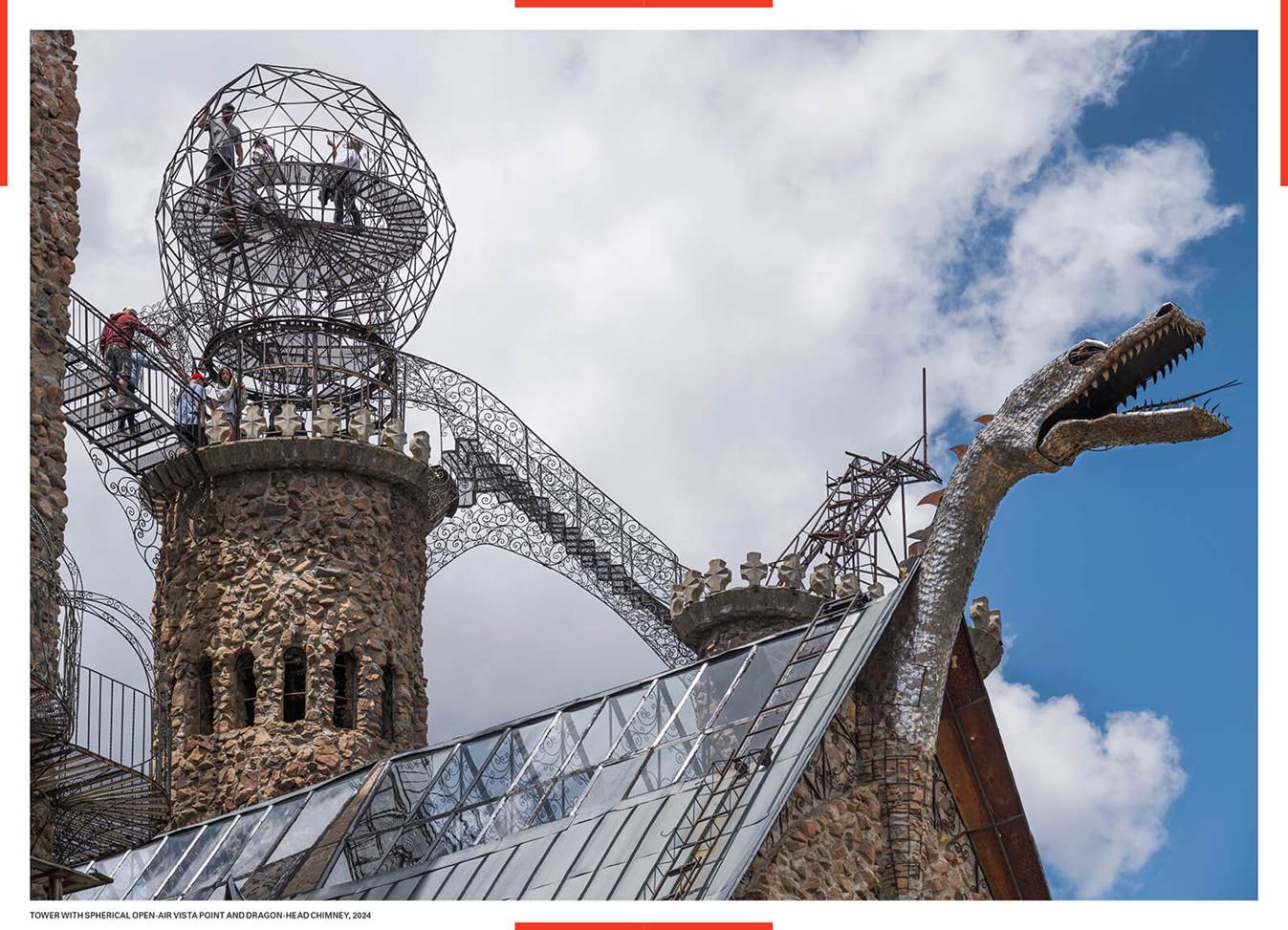
Jim Bishop, Bishop Castle, Rye, Colorado
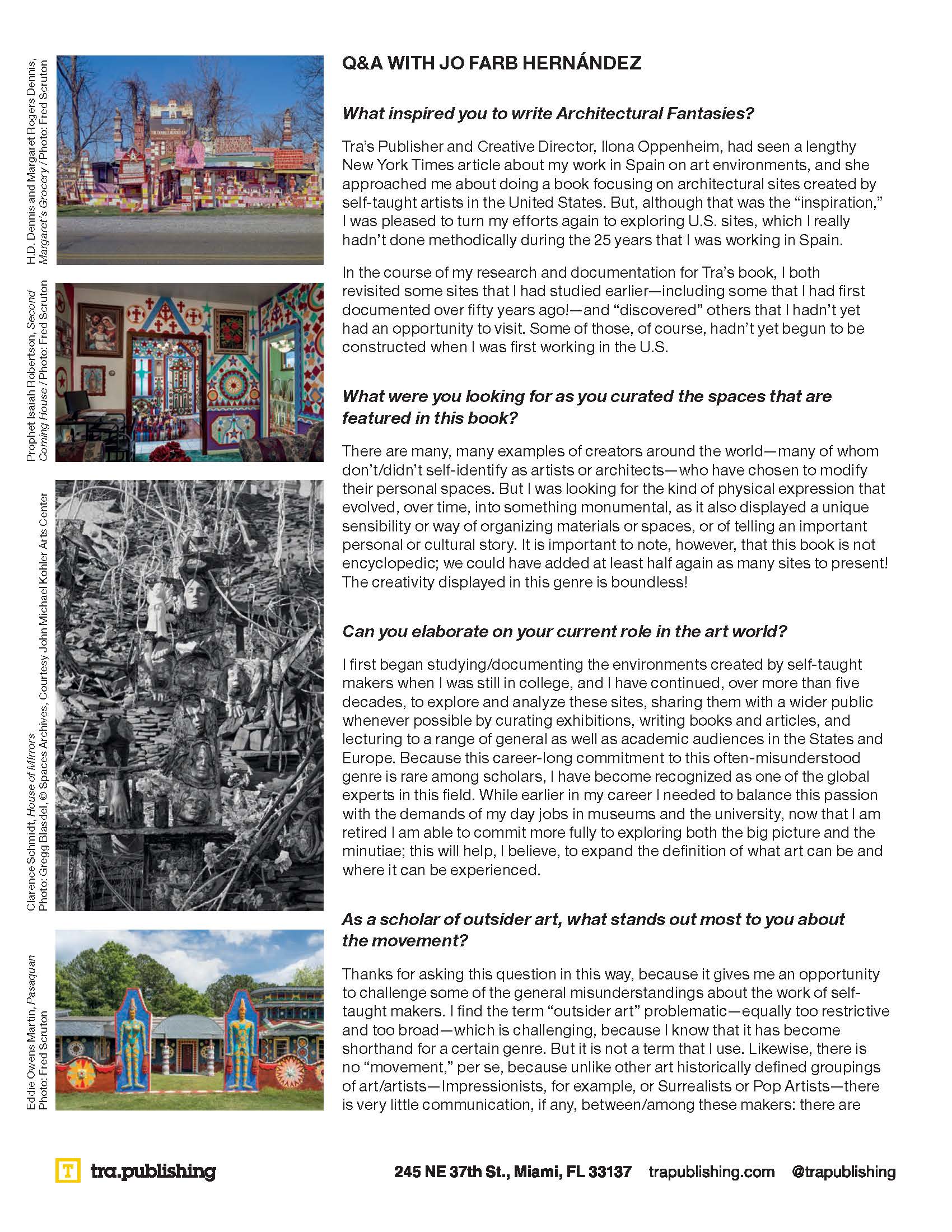
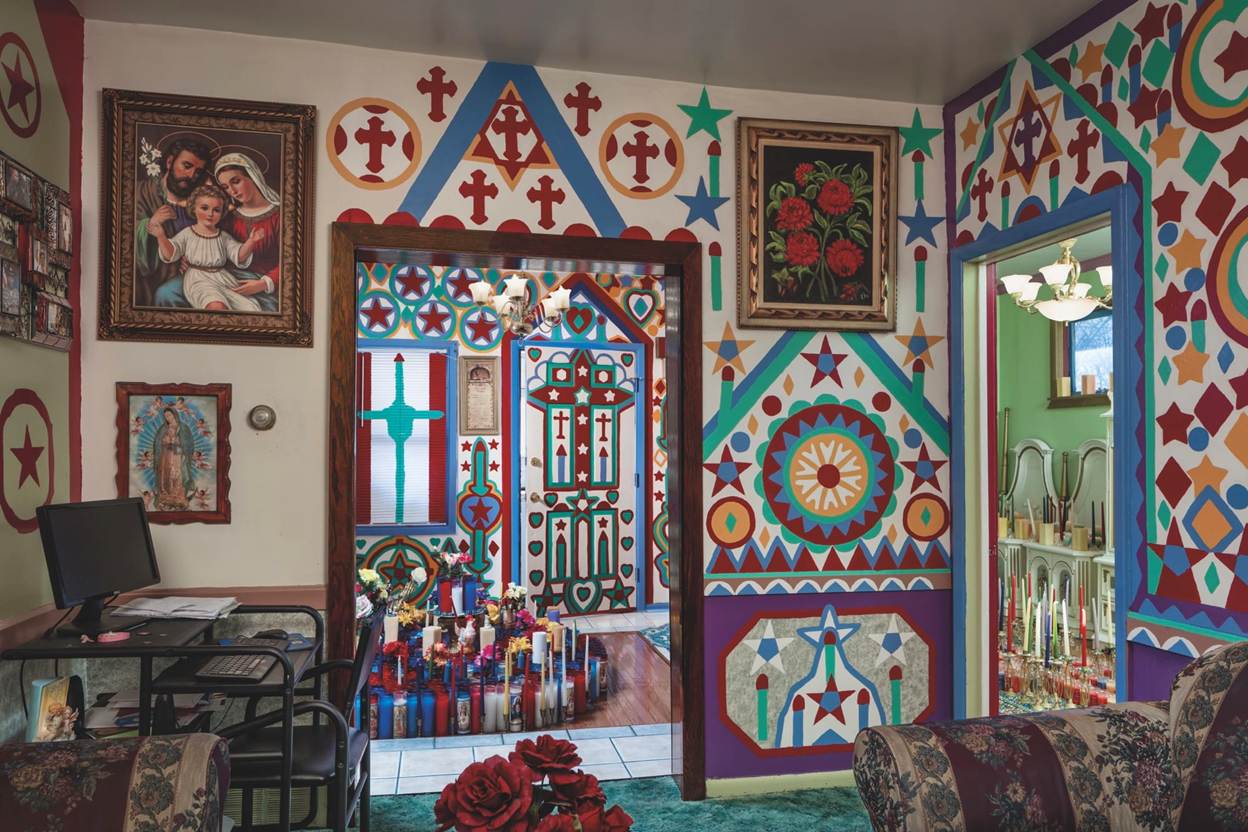
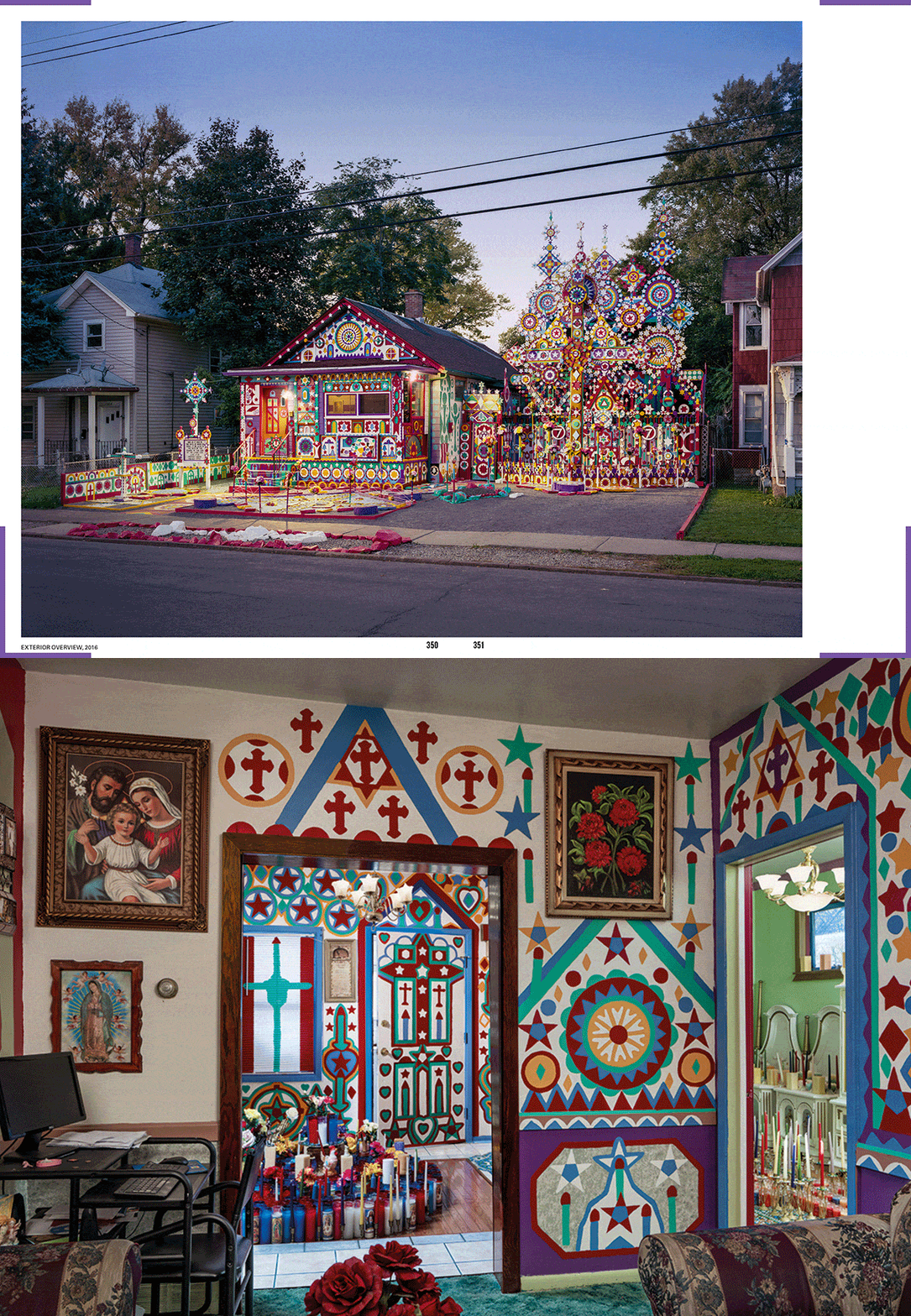
Prophet Isaiah Robertson, Second Coming House, Niagara Falls, New York
Prophet Isaiah Robertson, Second Coming House (interior), Niagara Falls, New York
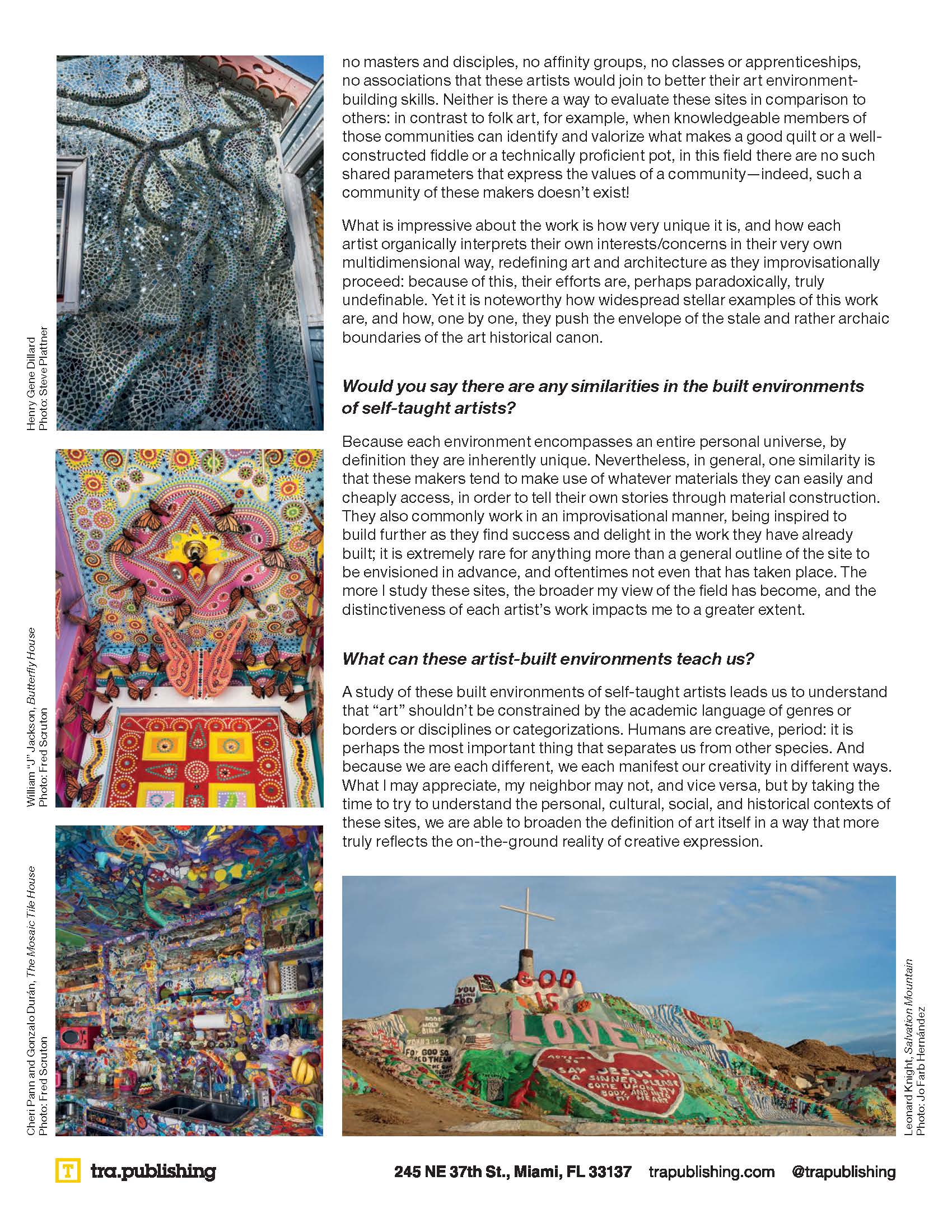
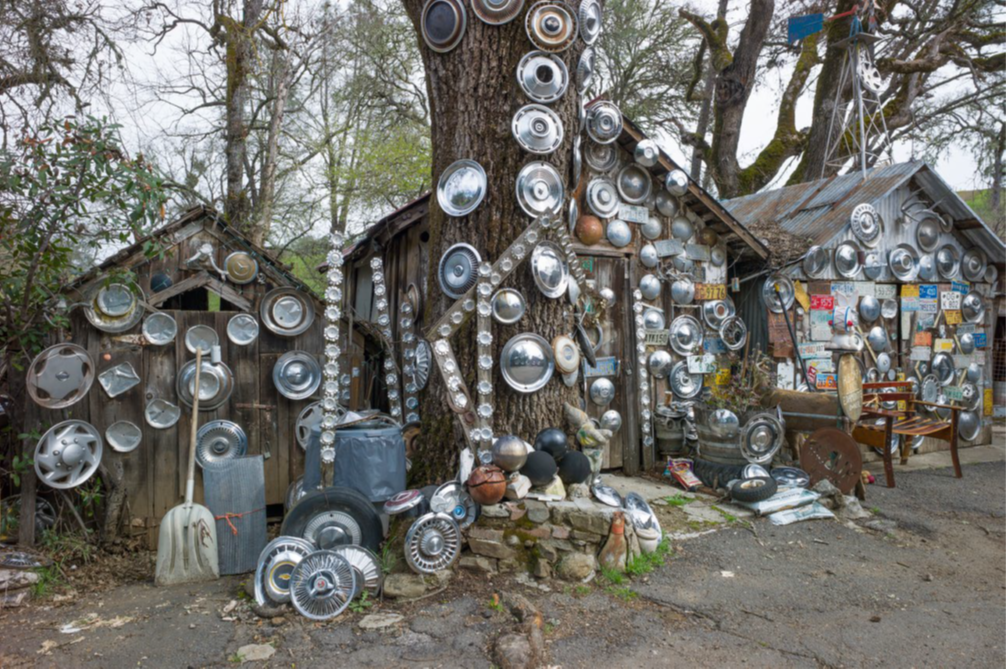
Emanuele “Litto” Damonte, Hubcap Ranch, Pope Valley, California. Photo by Steve Plattner
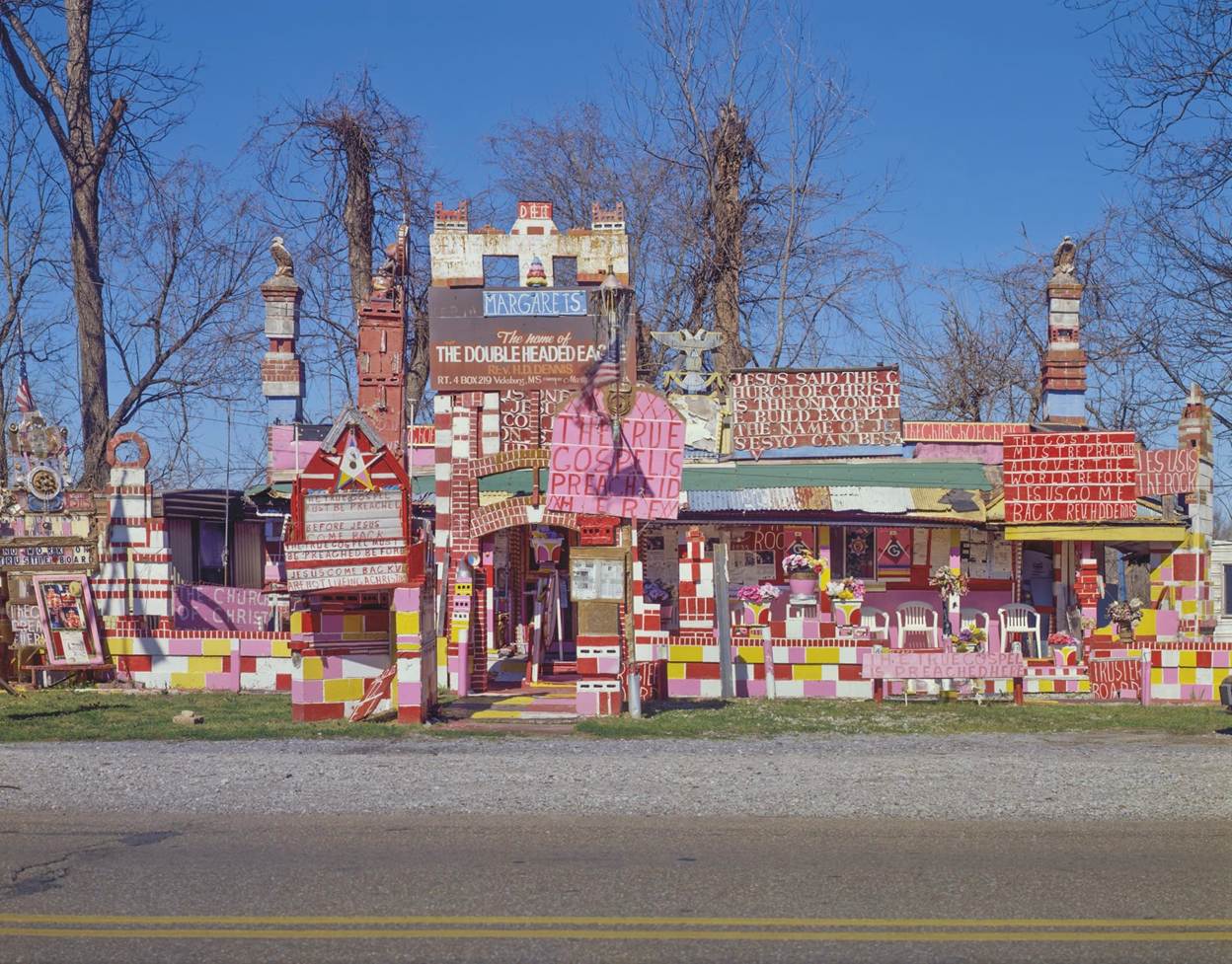
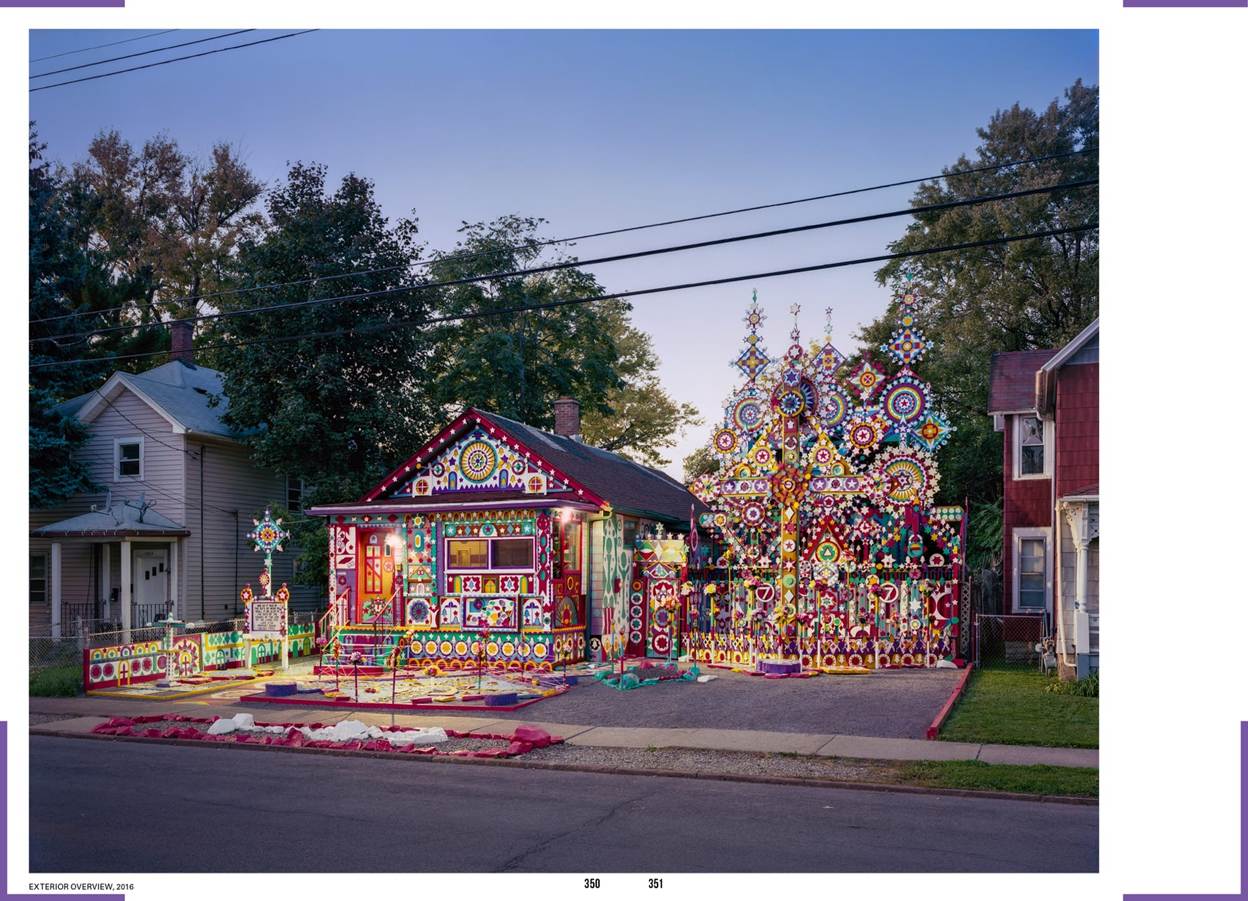
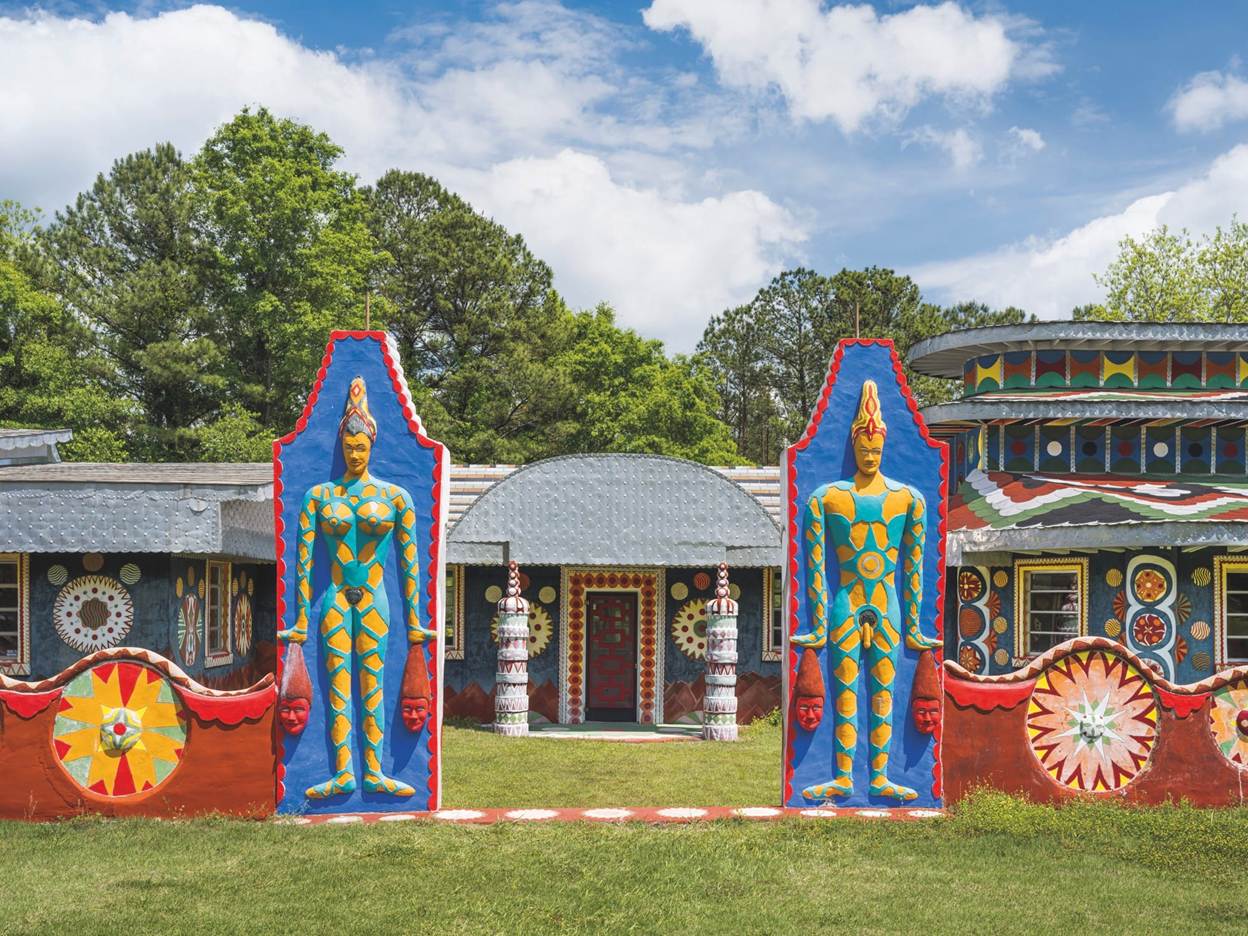
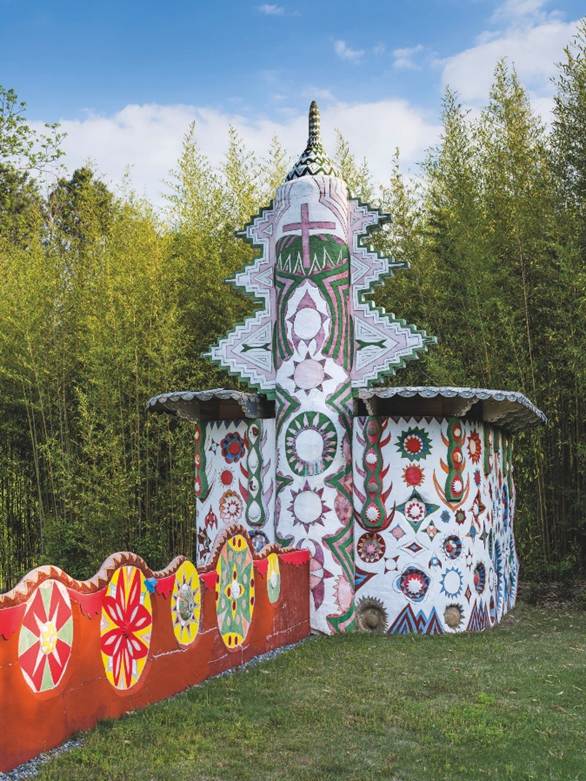
Eddie Owens Martin, Pasaquan, Buena Vista, Georgia
Eddie Owens Martin, Pasaquan, Buena Vista, Georgia
A new interview with Ambrose Gillick, creator of the renowned “A is for Architecture” podcast, which is regularly ranked among the top 20 design podcasts globally (and often polls within the top three some weeks). In this episode, Gillick examines not only this new book but the field of art environments in general, particular in relation to the challenge they pose for traditional architecture and architects. https://podcasts.apple.com/gb/podcast/jo-farb-hern%C3%A1ndez-artists-as-architects/id1588790585?i=1000774357161:
And another podcast interview, with Adam Oestreich, art environment enthusiast! It’s available on many platforms, but here is the YouTube video: https://www.youtube.com/watch?v=JdxwOKiEOIg. His ongoing podcast is called FolkArtwork and Friends; this is episode #10.
Architectural Fantasies: An alt-stream of idiosyncratic American architecture
Tra Publishing’s new title by Jo Farb Hernández surveys 60+ self-built ‘art environments’ across the US, where creativity, improvisation and whimsy expand the architectural canon.
Does whimsy have a place in ‘serious’ architecture?
The vocation has long been defined by a rather stringent flowchart: schools, movements, manifestos and architects that became canonical and the buildings that followed them, with a carefully relegated fringe. In 1964, Austrian-American writer and architect Bernard Rudofsky’s MoMA exhibition, Architecture Without Architects, complicated, or rather, matured that lineage by turning attention towards what he called ‘non-pedigreed architecture’—unorthodox buildings produced outside professional systems; the more local, vernacular and indigenous building traditions created by anonymous local builders instead of ‘qualified’ architectural professionals.
Architectural Fantasies: Artist-Built Environments, authored by Jo Farb Hernández and with principal photography by Fred Scruton, picks up a related idea from a more personal and considerably more exuberant built environment for the author. What are the results of people creating structures or spaces with no particular interest in where architecture is supposed to end, and decoration, sculpture, fantasy or self-expression is deemed gospel?
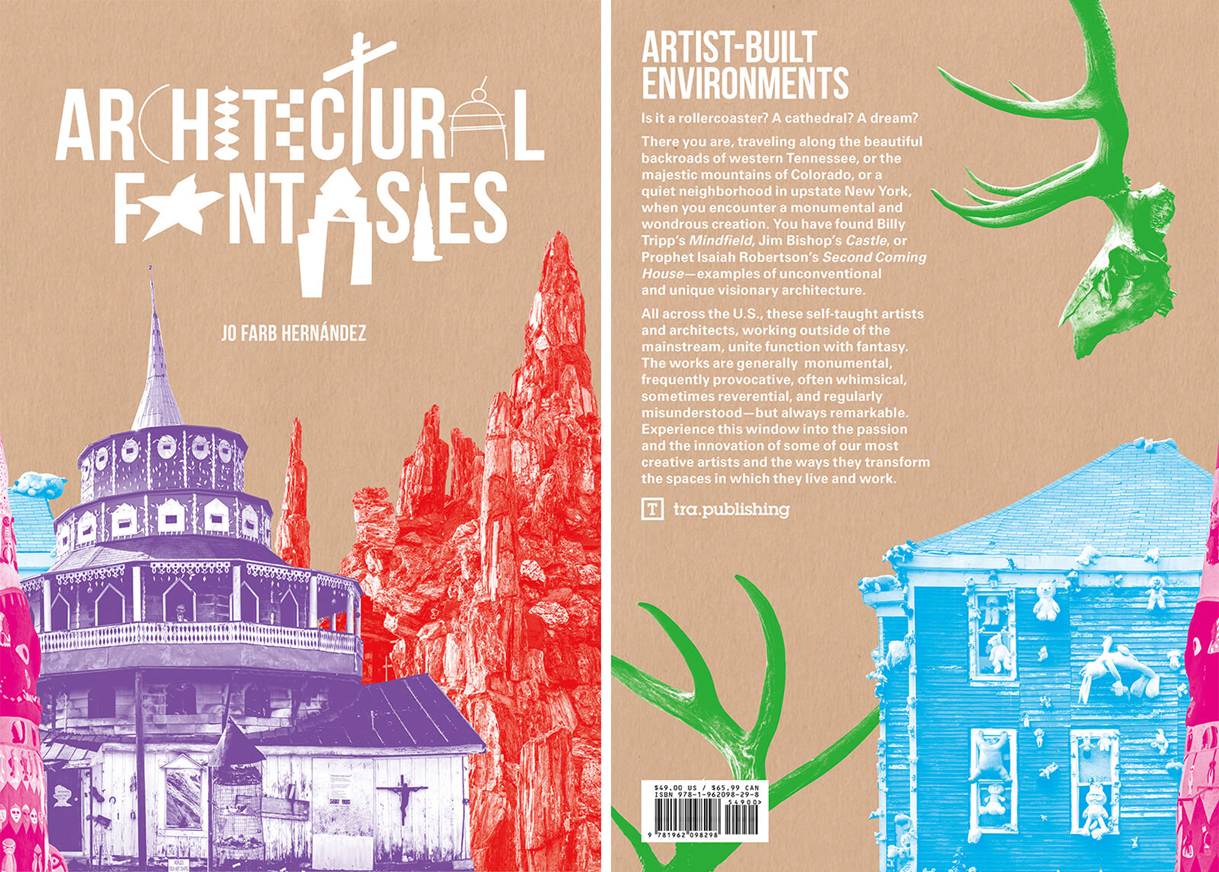
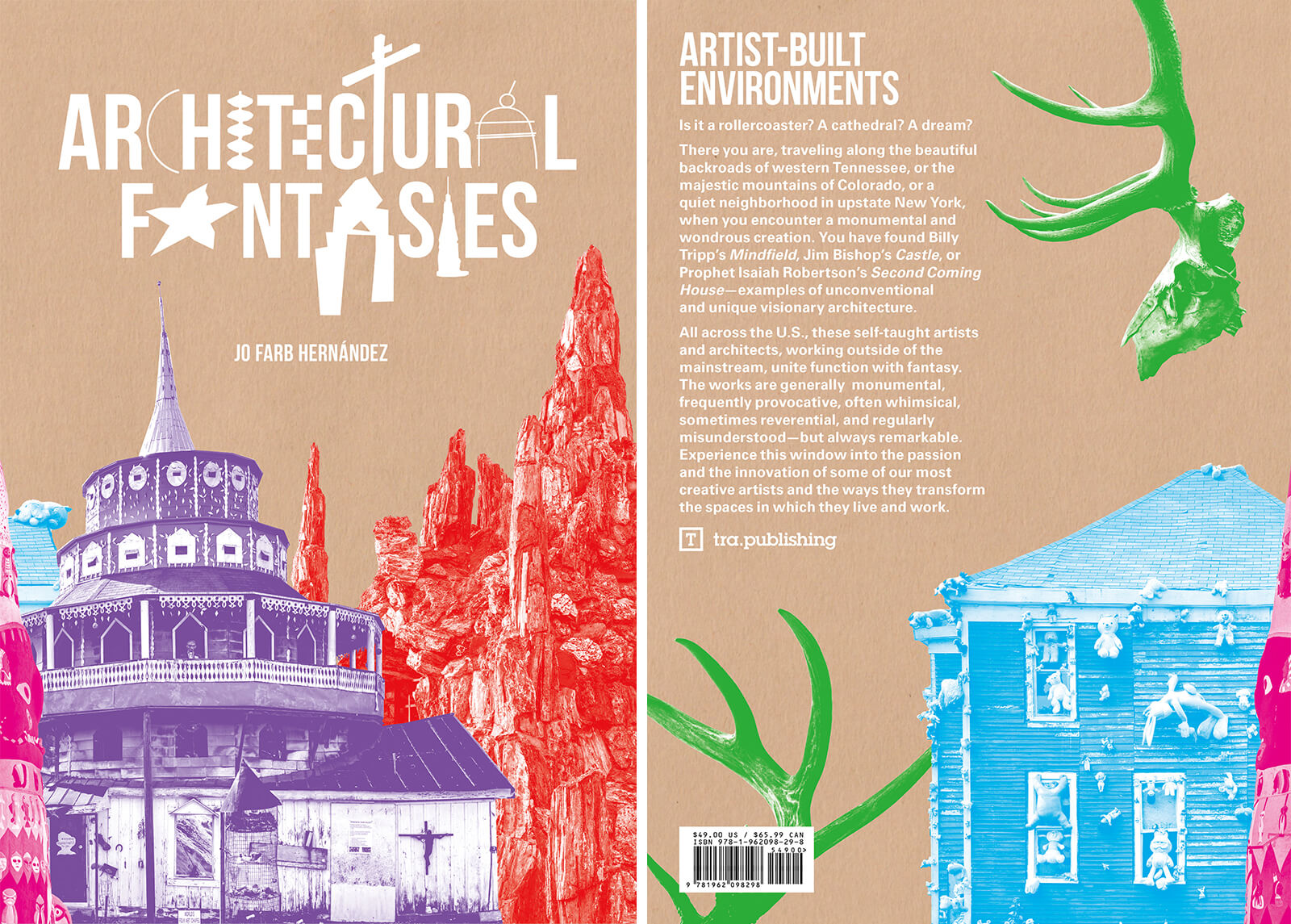
The front and back covers of Architectural Fantasies: Artist-Built Environments by Jo Farb Hernández. Image: Courtesy of Jo Farb Hernández and Tra Publishing
Curator, scholar and photographer Hernández’s survey of more than 60 environments across the United States gathers structures—or ‘outsider art’ and ‘outsider architecture’ as the author mentions in the book’s introduction—by people who may call themselves artists, builders, pastors, restaurateurs or none of these things. Non-architects, if you will. “Without specialised training, they begin to build with whatever materials they can easily access and afford. There are rarely preliminary sketches, and working drawings, sections, elevations and schematics are rarer still. The lack of written plans is usually accompanied by a lack of required permits,” she notes.
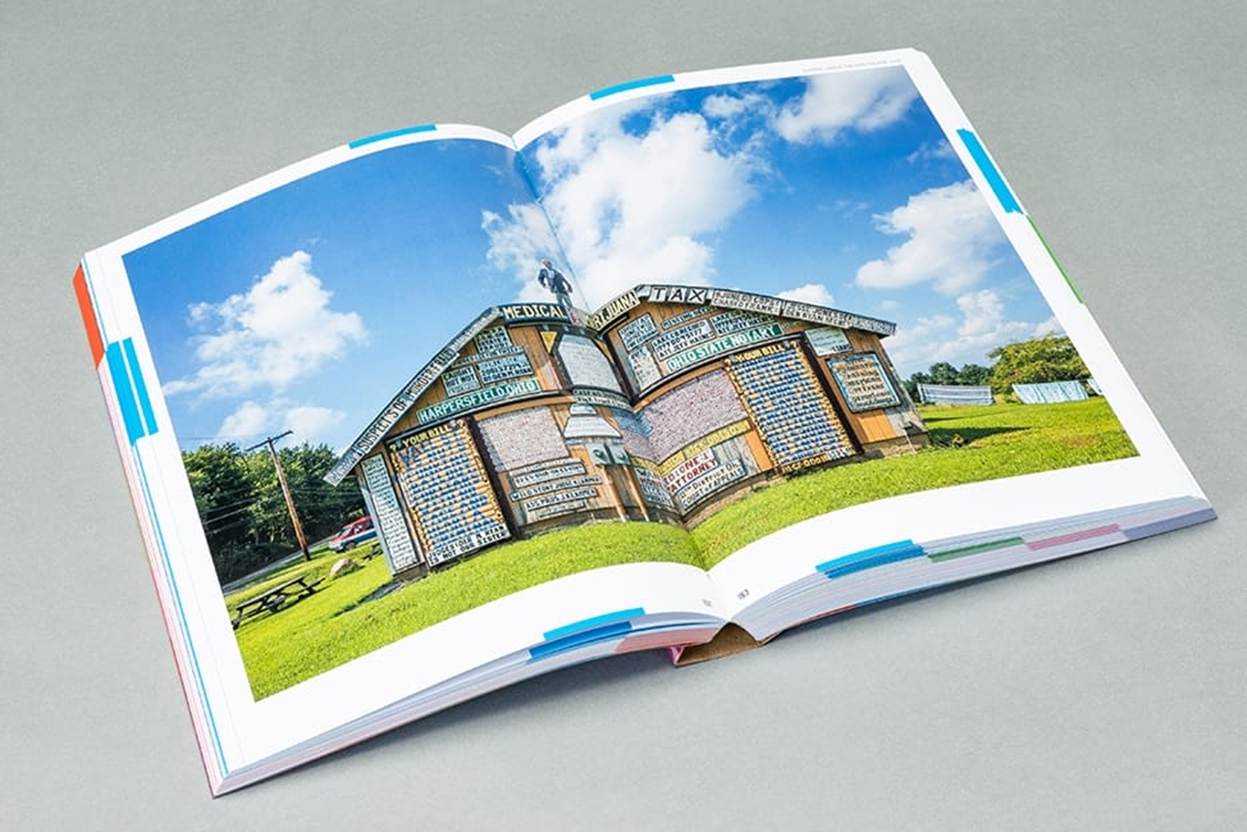
Spreads from the title, chronicling over 60 art environments across the US created by self-taught artists and architects who unite function with fantasy. Image: Courtesy of Jo Farb Hernández and Tra Publishing
Hernández calls what they’ve built over the years ‘alt-stream architecture’: a field shaped by makers who operate idiosyncratically, independently of recognised movements or conventions. Their buildings, “most…devoid of the intent to profit monetarily from the work”, often give little indication of the social, cultural or aesthetic circumstances of their neighbours; instead, they reveal what Hernández calls the intimate relationship between ‘builder and building’, one that “disrupts predictability, bypasses tradition and is unburdened by conformity”. Some of these are eccentric, funny, excessive, obsessive, beautiful, awkward, difficult to preserve or replicate and occasionally just strange, as the book by Tra publishing reveals across its five chapters. Being so singular, they can also be challenging to read through familiar architectural categories: a residence as sculpture, an object and trinket collection that takes over a room, a garden as a religious conclave or a monument as autobiography; all, always public-facing.
The Second Coming House by Prophet Isaiah Robertson in Niagara Falls, New York. Image: Fred Scruton; Courtesy of Jo Farb Hernández and Tra Publishing
“Experimental and experiential, with their paeans to love, to faith, to honour, to personal histories and cultural memories—or, in other cases, as a means to air protests and grievances—these idiosyncratic architectural sites straddle a space between the private and the public,” the introduction conveys.
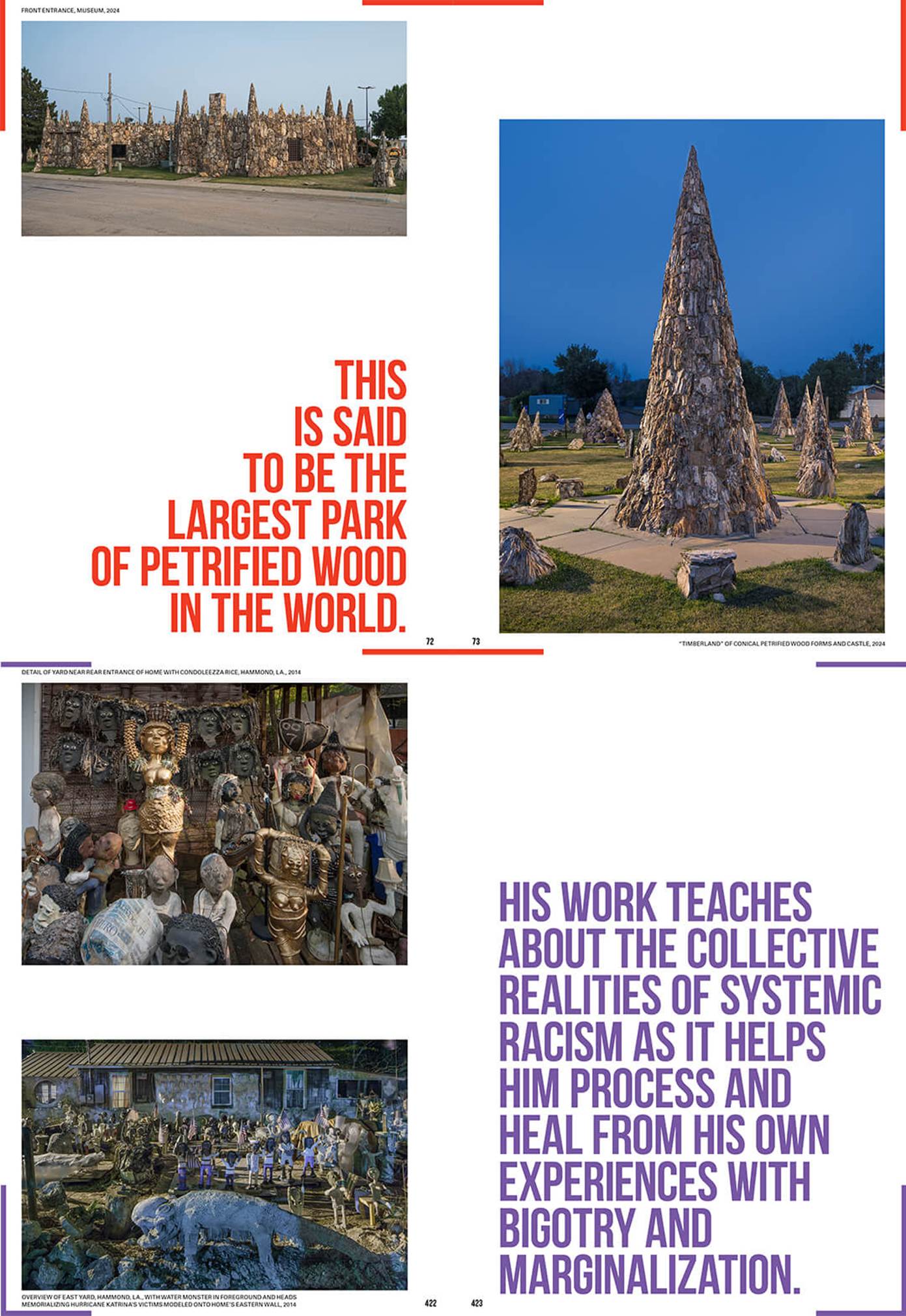
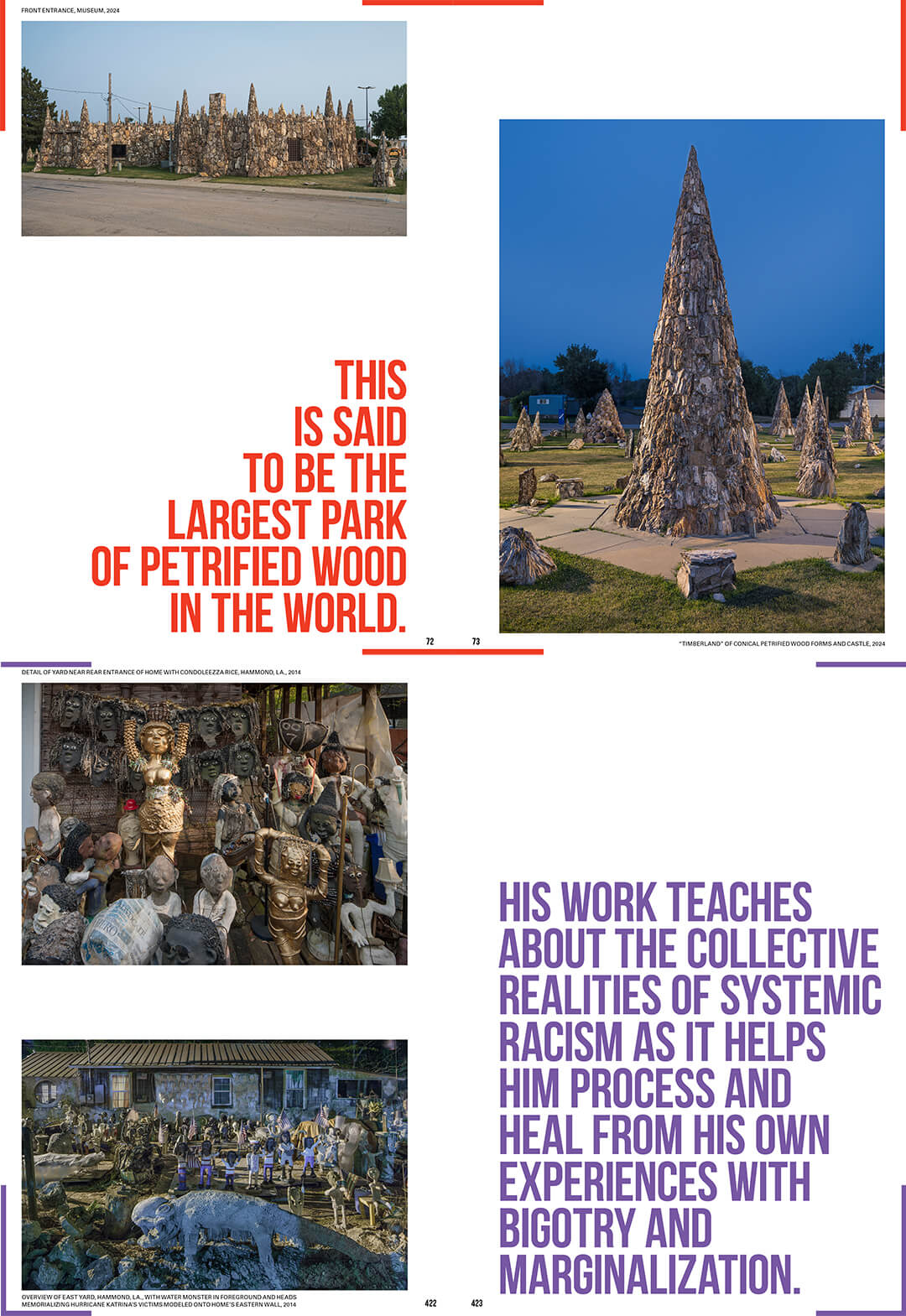
The spreads combine pointed images of the ‘alt-stream architecture’ Hernández professes alongside enlarged, often anecdotal text. Image: Courtesy of Jo Farb Hernández and Tra Publishing
An absence of dictation and the freedom to exercise almost no restraint is part of what makes these environments so visually and conceptually distinct. The applied whimsy can also be discomfiting: without the usual architectural cues of proportion, restraint or completion, there is little to tell the viewer where a building should stop. As the book regularly points out, these builders rarely work through documented schematics; often there is no fixed idea of what the finished structure will become. Hernández observes that “process often overtakes final product as the driving force”, producing outcomes where “lack of planning and obsessive intentionality intertwine”.
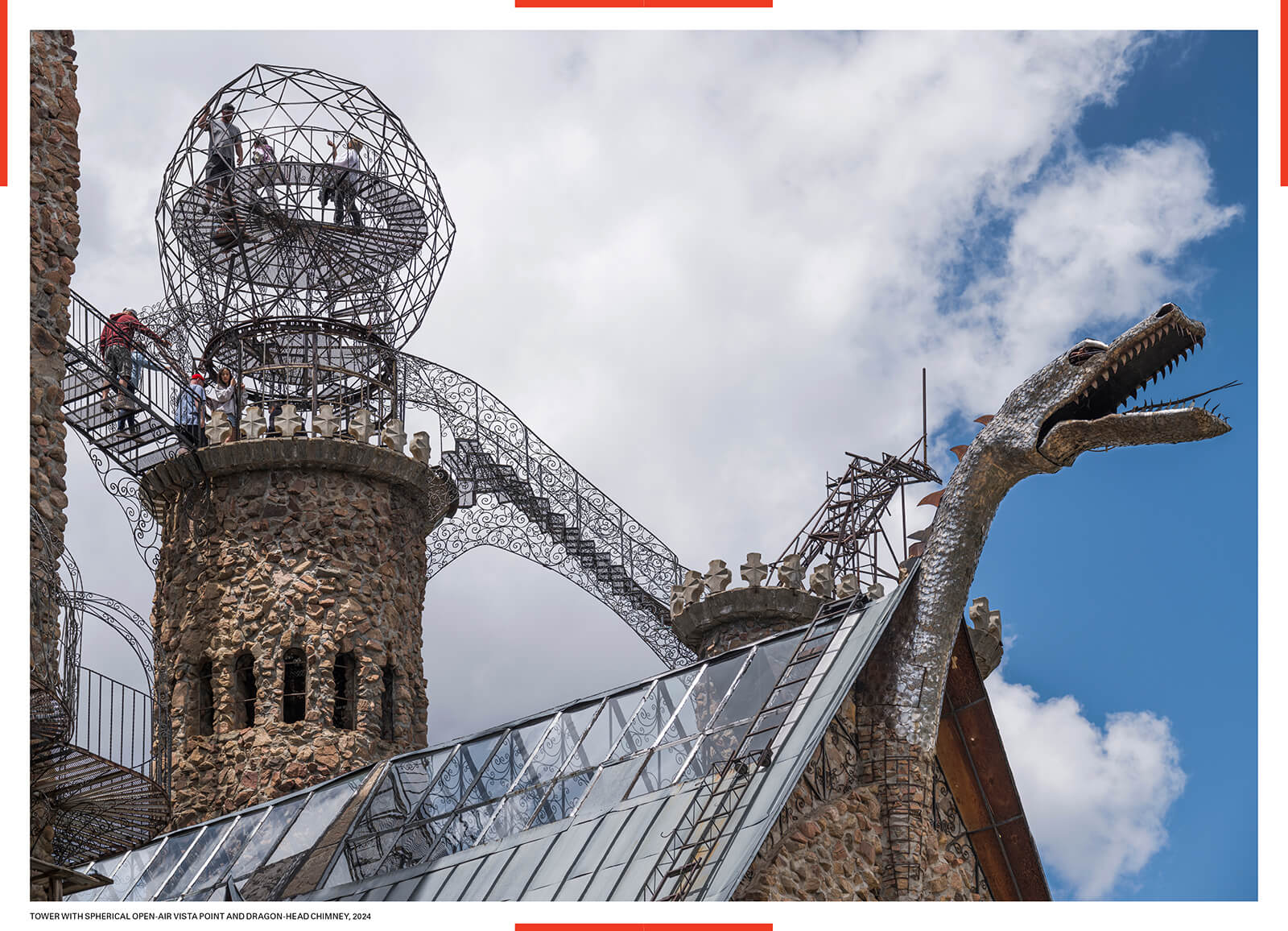
The Bishop Castle by Jim Bishop in Rye, Colorado. Image: Courtesy of Jo Farb Hernández and Tra Publishing
In the Built from Scratch – New Architecture chapter, we delve into Jim Bishop’s Colorado castle, which begins with a cabin and a 40-foot water tank before growing into a 160-foot structure of stone, ironwork, stained glass, stair bannisters and a dragon as its chimney, made from stainless steel hospital trays. We learn that he subsequently inserted a donated burner, originally used to power a hot-air balloon, into the figure’s throat, giving the improvised dragon a more ‘authentic’ fire-breathing element. In Riverside, California, the Tío’s Tacos Chapel by Martín Sánchez, a Mexican restaurant owner and operator, is an environment that similarly accumulates through found objects and recycled material. Its creator had been collecting and sorting beer and soda bottles and other discarded objects without knowing where they would eventually find their place, an ongoing exercise in what Sánchez describes as ‘creating joy from trash’.
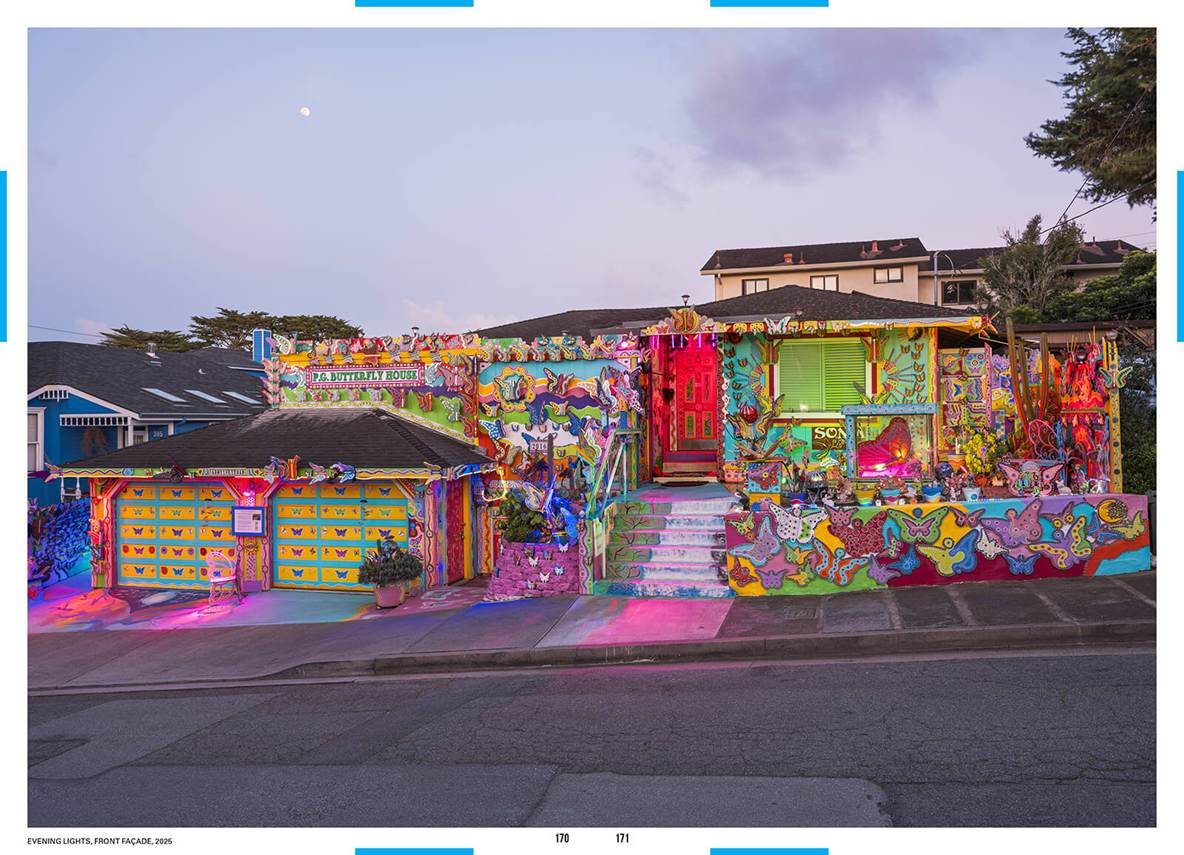
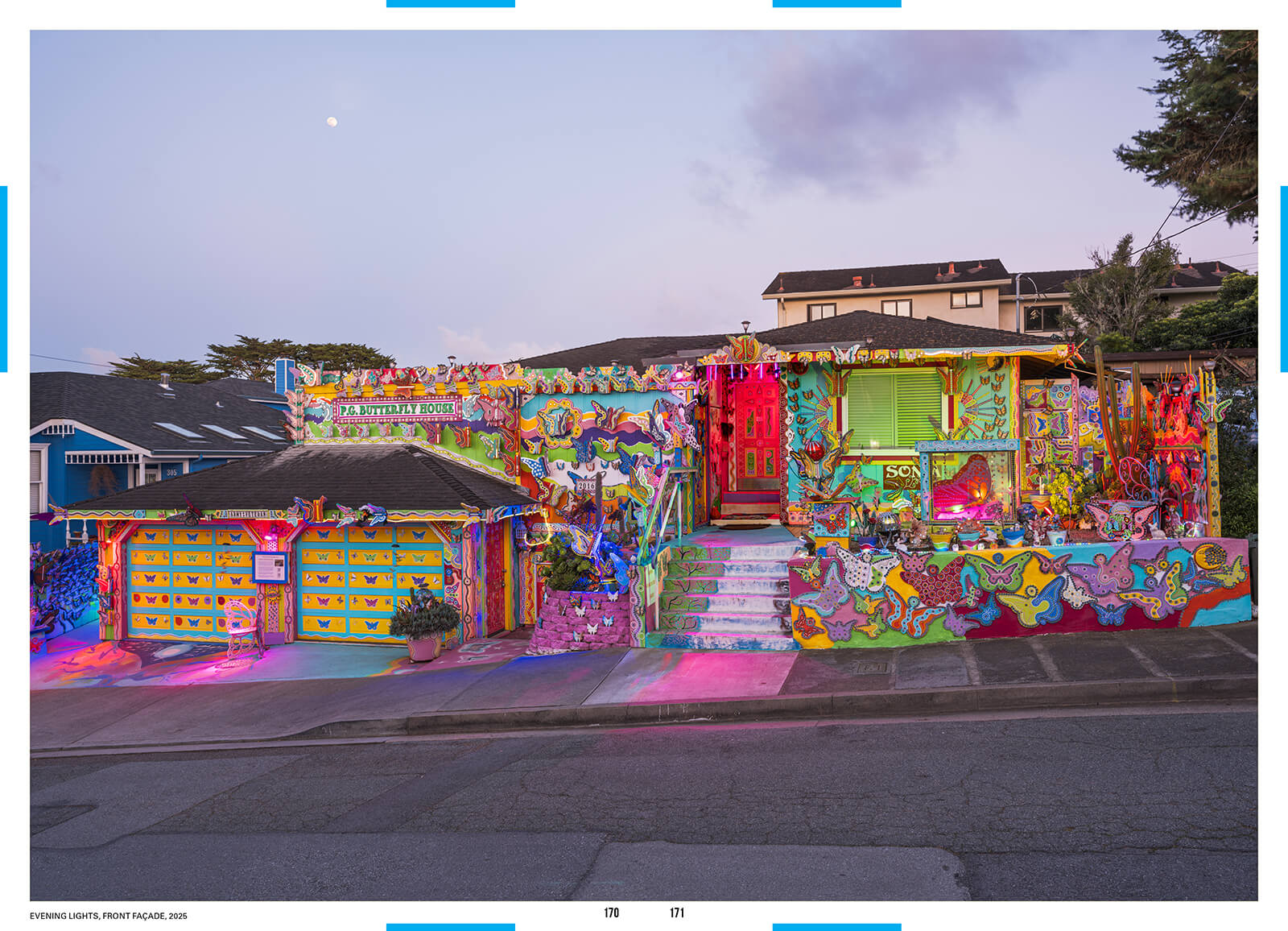
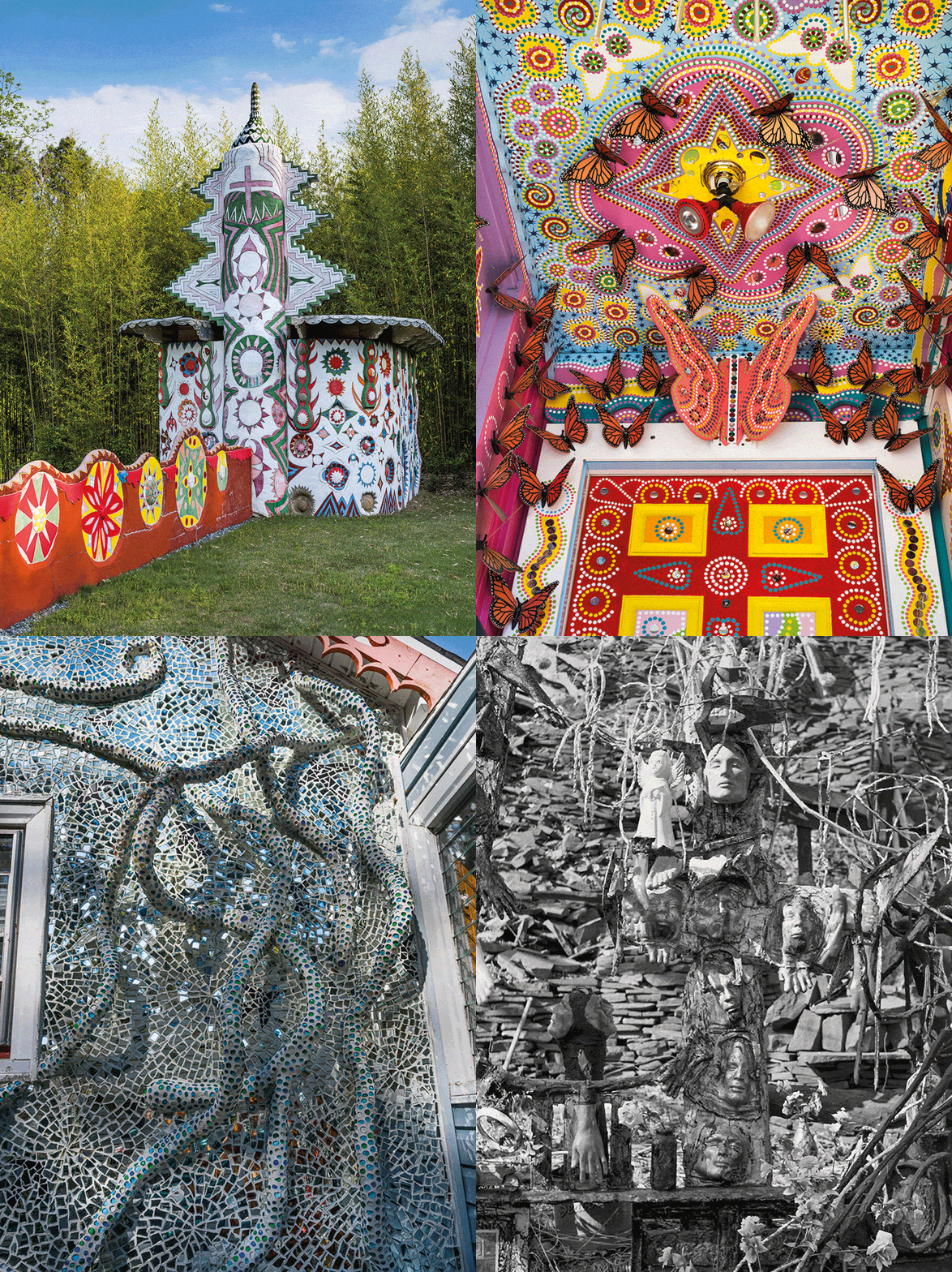
The Butterfly House by William Norman “J” Jackson in Pacific Grove, California. Image: Courtesy of Jo Farb Hernández and Tra Publishing
That mega-expressive instinct also helps reconstruct existing buildings, with found materials becoming as consequential as the structure beneath them. Hernández writes of people who turn their homes into ‘blank canvas[es]’, allowing decoration to transgress the familiar boundary between structure and ornament. In Chapter 2, From Conventional to Offbeat – Modifying Existing Buildings, upholsterer John Milkovisch’s Beer Can House in Houston, Texas, is an especially literal example: aluminium beer cans (accumulated over 17 years), flattened and cut, become his home’s skin and curtains, while the detritus of everyday consumption acquires another life as architectural material. In Florida, the vibrant Whimzeyland by the Whimzey Twins developed in a similarly open-ended way, with scavenged resources, from bed spindles, pieces of balconies and bowling balls added directly to the site as they appeared, without so much as a sketch, an aesthetic the couple describe as ‘more is more’.
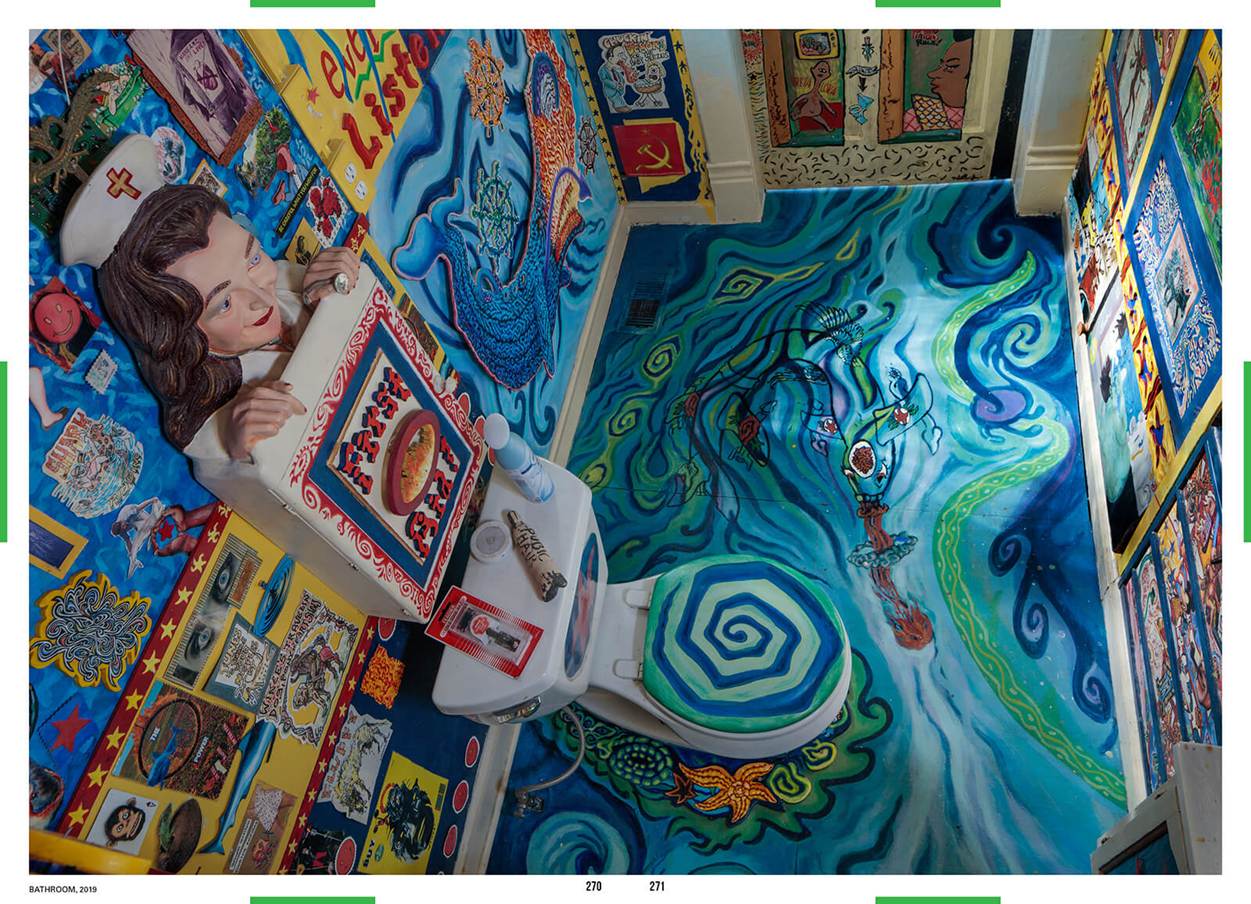
The WinceWorld by Charles Wince in Columbus, Ohio. Image: Courtesy of Jo Farb Hernández and Tra Publishing
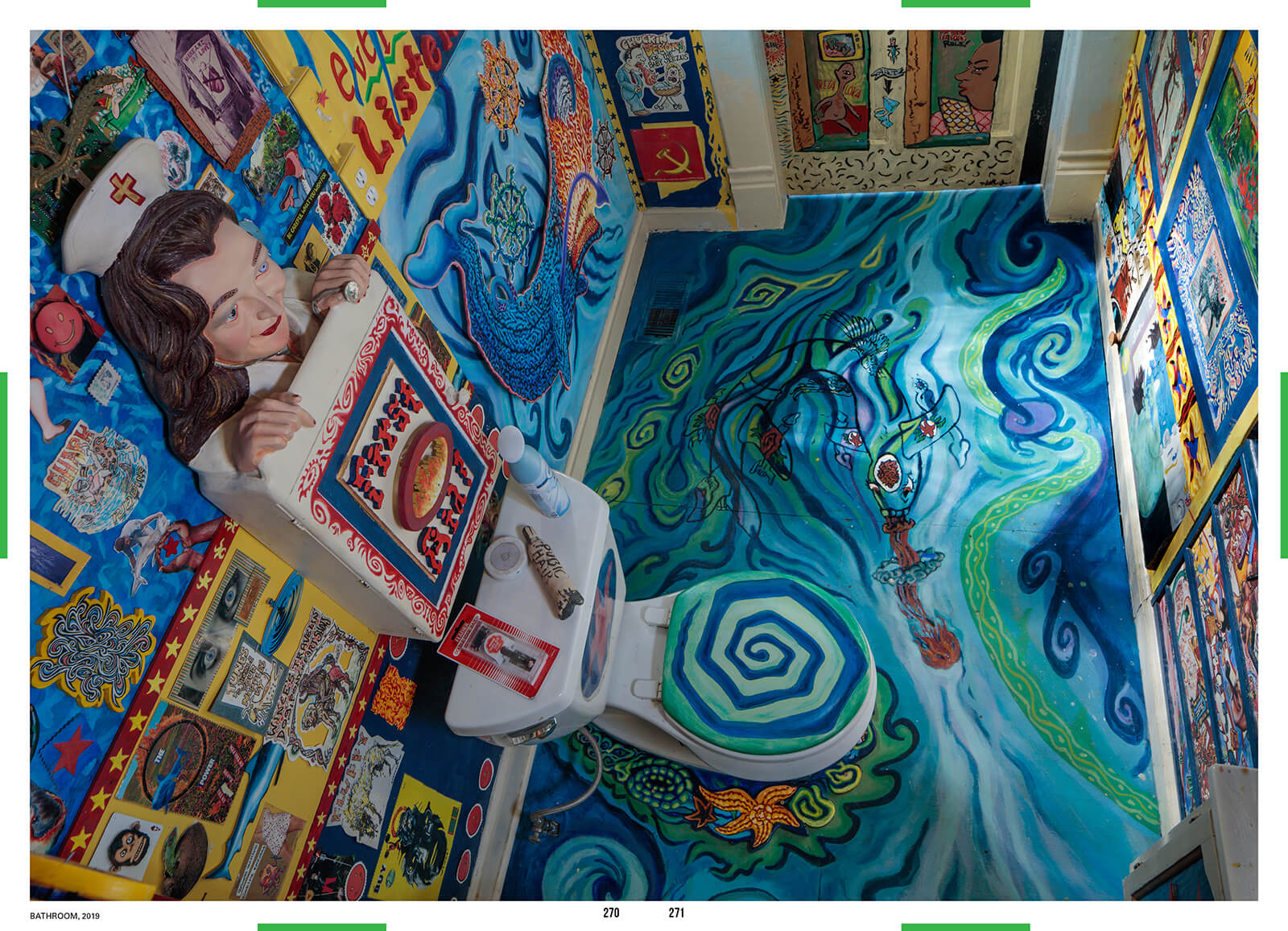
Inside, that impulse becomes even more pronounced, as seen in the examples comprising Hidden from View – Decorated Interiors. Charles Wince’s WinceWorld in Columbus, Ohio, grows from a rundown house into a dense interior landscape of paintings, assemblages, ceramic tiles and other media as cosmetic treatments. His work folds biography into “social and political commentary, consumerist irony and greed, soft porn, dark humour and graphic lettering”, with the house becoming the setting in which those interests and incongruities coexist. The distinction between decorating and breathing life into a fully-fledged expression dissolves. Personal collections, memories and obsessions become spatial material.
“In every case, however, while there may be a disconnect with what their community understands this kind of construction to be—a disconnect that, in the most egregious cases, motivates neighbours to call for the site’s demolition or renormalisation—these creatives are commenting on their own lives, their faith or lack of it and the state of their universe in a personal way: a way that is the only way they know, a way they choose and a way in which theirs is the only voice that matters,” Hernández states.
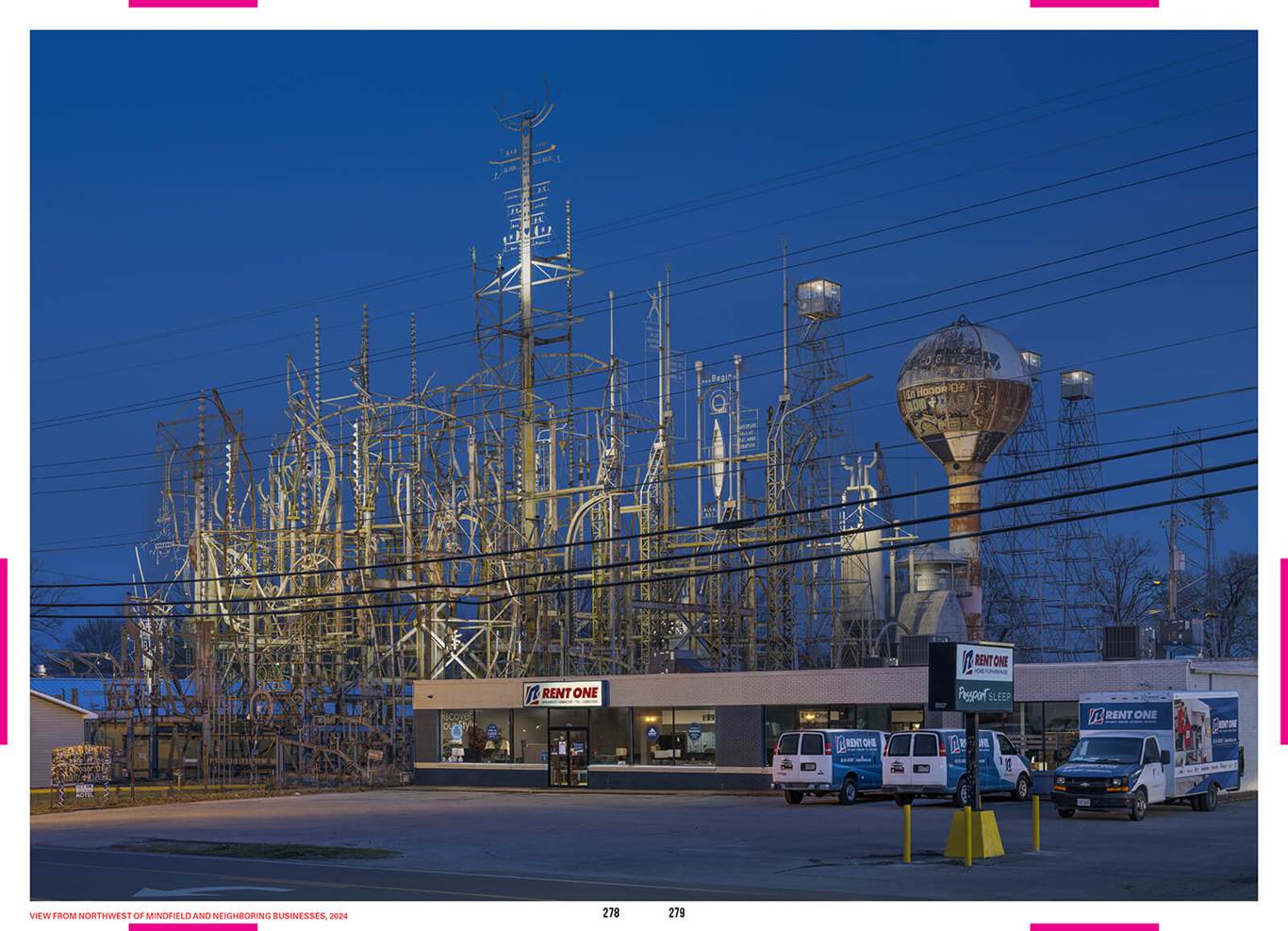
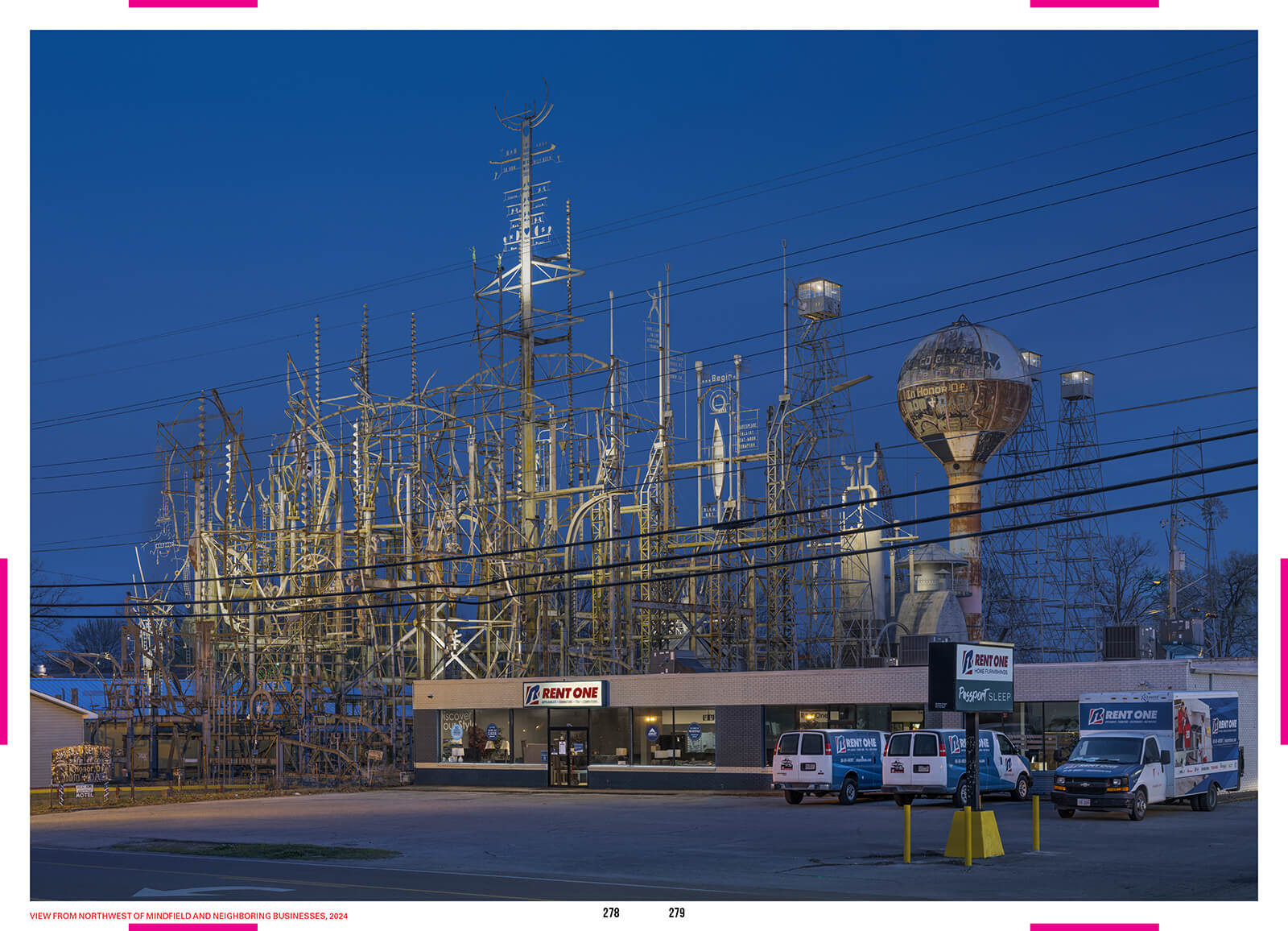
The Mindfield Cemetery by William “Billy” Blevins Tripp in Brownsville, Tennessee. Image: Courtesy of Jo Farb Hernández and Tra Publishing
The later chapters move these private impulses into the realm of monuments, memory and belief. At Vince Hannemann’s Cathedral of Junk in Texas, components range from bricks and steel to mannequins, CDs, porcelain toilets and tyres. The result is what Hannemann describes as his ‘Frankensteinian creation’. Here, accumulation is read as structure, and the question of permission becomes harder to avoid (Chapter 4: No Occupancy Permit Required – Architectural Monuments). The Watts Towers in LA, which Hernández calls ‘the most renowned U.S. art environment’, grew over more than three decades as Sabato Rodia worked with discarded glass, bottles, seashells, stones, broken pottery, tiles, dishes and mirrors. Around his home, fountains, niches, seating, a gazebo, ‘stalagmite’ gardens, plazas and walkways gathered around the tall conical towers; he worked by ‘building, removing, rebuilding, transforming’. Their construction was as improvisational as it was technically inventive: Rodia developed his own ‘Rodia Joint’, wiring triangular elements into tetrahedrons without nails, bolts or rivets. Hernández notes that Hannemann considers Rodia to have given him ‘conceptual permission’ to build, a lineage that extends from the Watts Towers to the Cathedral of Junk.
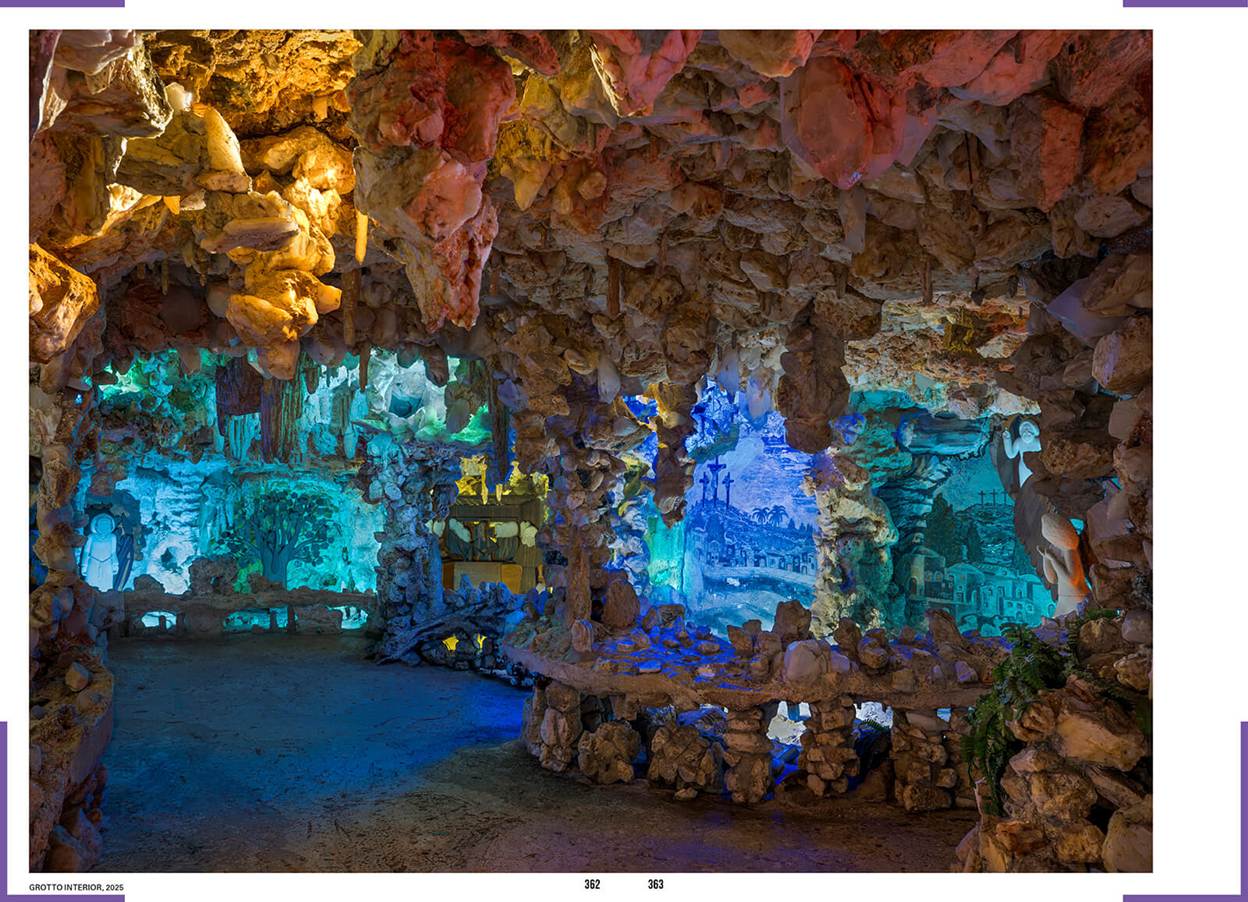
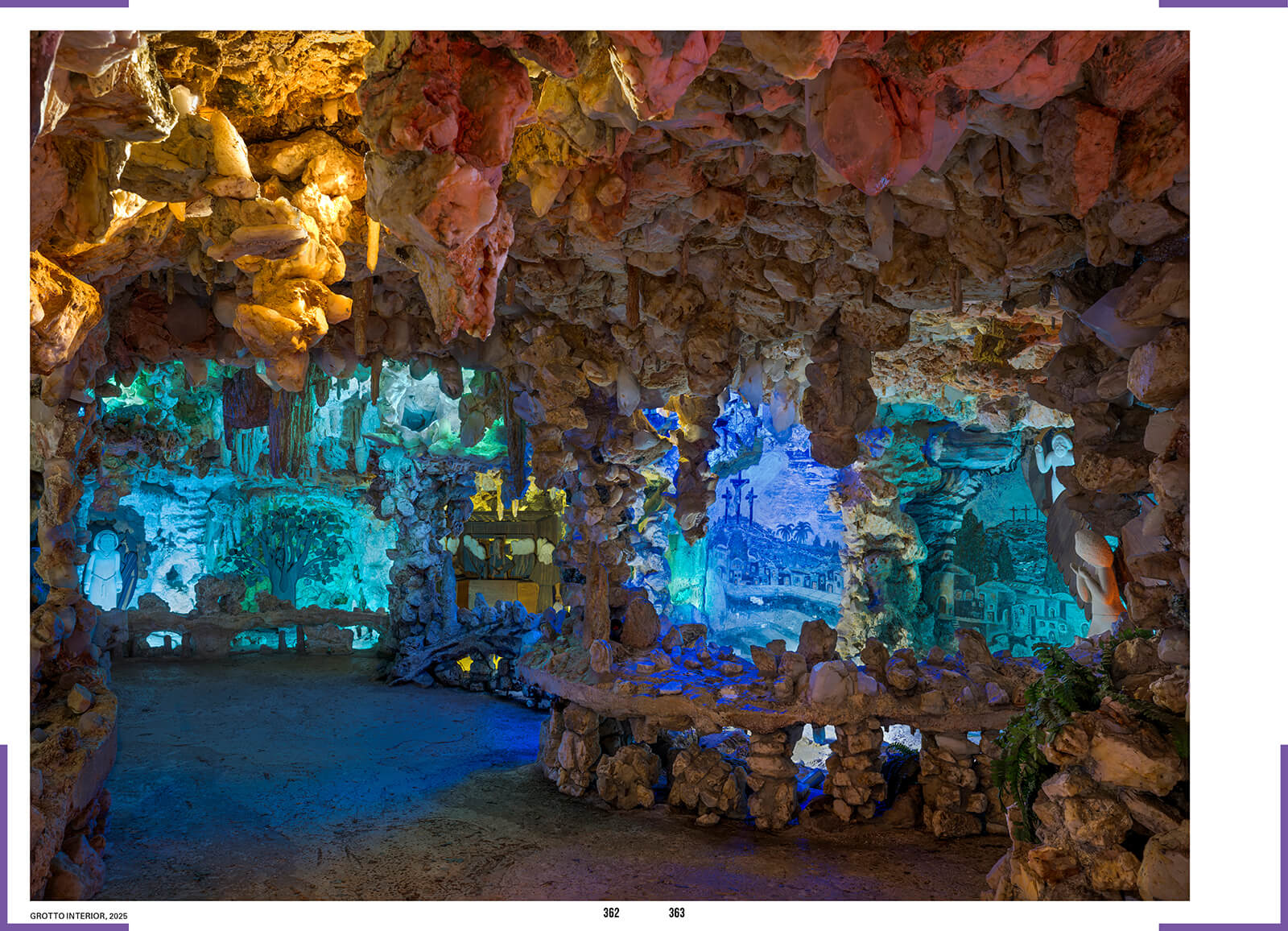
The Crystal Shrine Grotto by Dionicio Rodríguez in Memphis, Tennessee. Image: Courtesy of Jo Farb Hernández and Tra Publishing
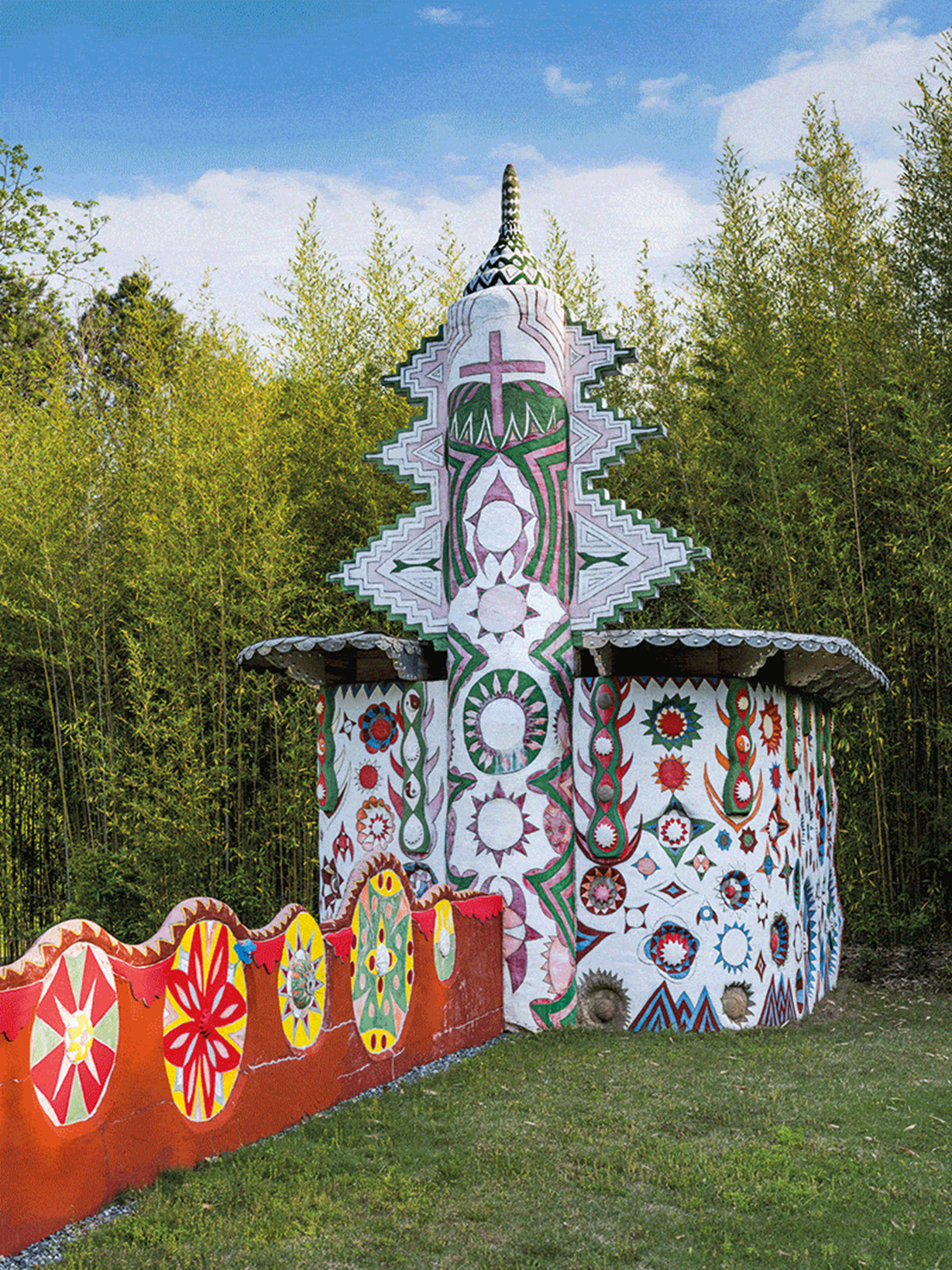
By the final chapter, A Higher Calling – Sites of Honor, Memory, and Devotion, architecture has become inseparable from belief, with art environments “assembled out of a desire to pay homage to a concept larger than ourselves”, as Hernández writes. Pasaquan by Eddie Owens Martin in Buena Vista, Georgia, began with a modest residence and outbuildings and gradually evolved into pagodas, shrines, totems, temples and a worship and dance circle. Its forms draw from Martin’s personal religious system and his interpretations of Native American, Asian and African cultural references alongside imagined worlds of Mu and Atlantis. Hernández calls it a site that ‘pushes boundaries and categories’; Martin was, after all, his religion’s only priest and practitioner of ‘Pasaquoyanism’.
Meanwhile, at Margaret’s Grocery and Market in Vicksburg, Mississippi, the transformation is more intimate and offbeat. Margaret Rogers had opened the modest grocery in the 1950s; after she married preacher H.D. Dennis in 1984, he promised to turn it into a castle. Over two decades, the former store accumulated towers, walkways, hand-painted Biblical signs and other found objects, as well as a school-bus chapel decorated with Christmas lights, Mardi Gras beads, tinsel, plastic flowers and hubcaps. The site eventually became a ‘nondenominational’ (but decidedly Christian) religious centre, as groceries were gradually displaced by ornamentation and religious imagery across its rooms.
Overview, Salvation Mountain and Museum, 2009, by Leonard Knight (Niland, California). Image: Courtesy of Jo Farb Hernández and Tra Publishing
Taken together, these sundry environments return Architectural Fantasies to the provocation of non-pedigreed architecture. If Rudofsky looked beyond professional authorship to understand the ways communities build, Hernández points towards a particularly American architectural constellation of self-taught makers, where individual expression, improvisation and material resourcefulness have produced environments that sit awkwardly alongside the conventional and canon; a kind of self-directed building which is not an isolated eccentricity attached to a handful of peculiar buildings.
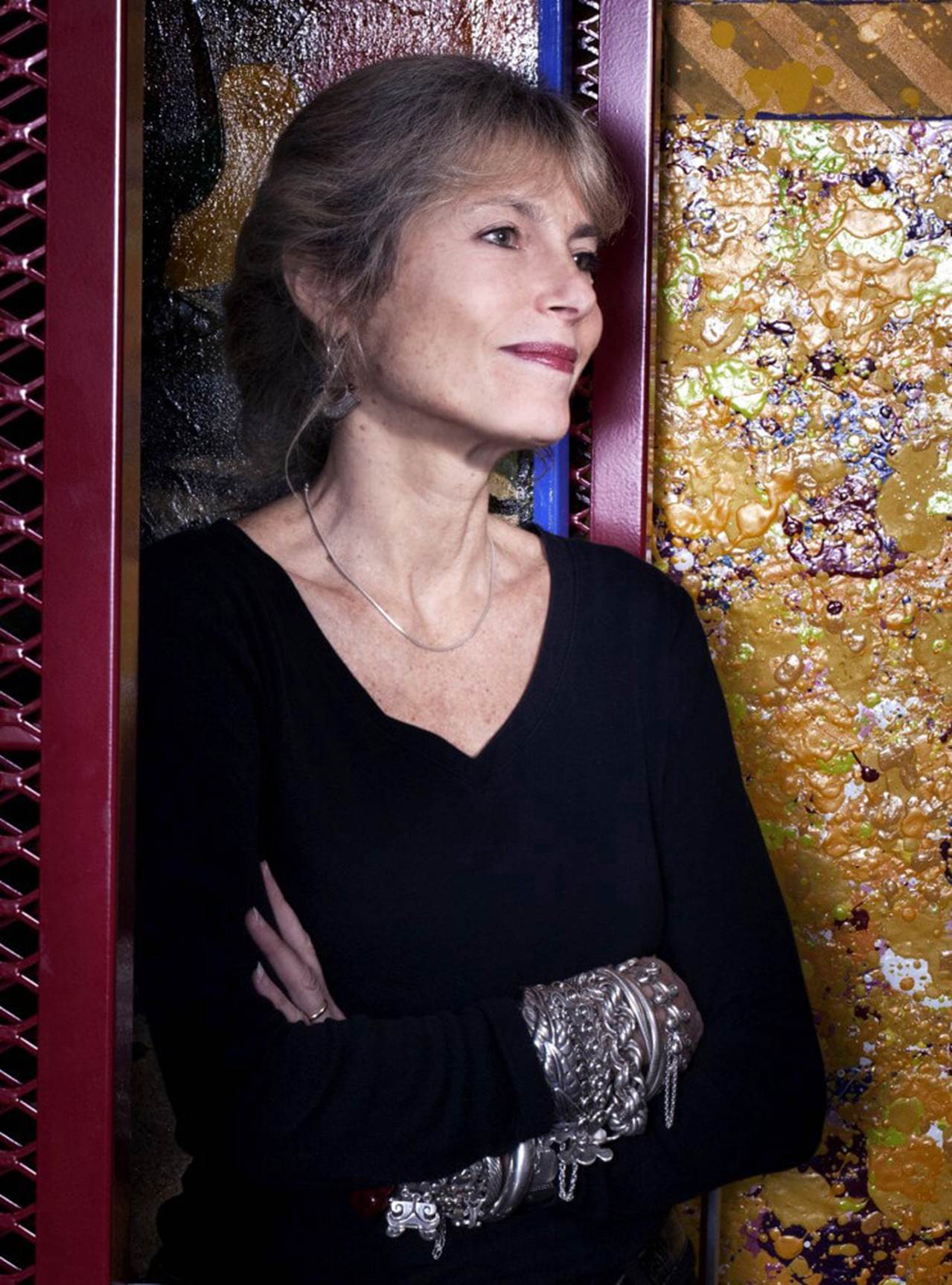
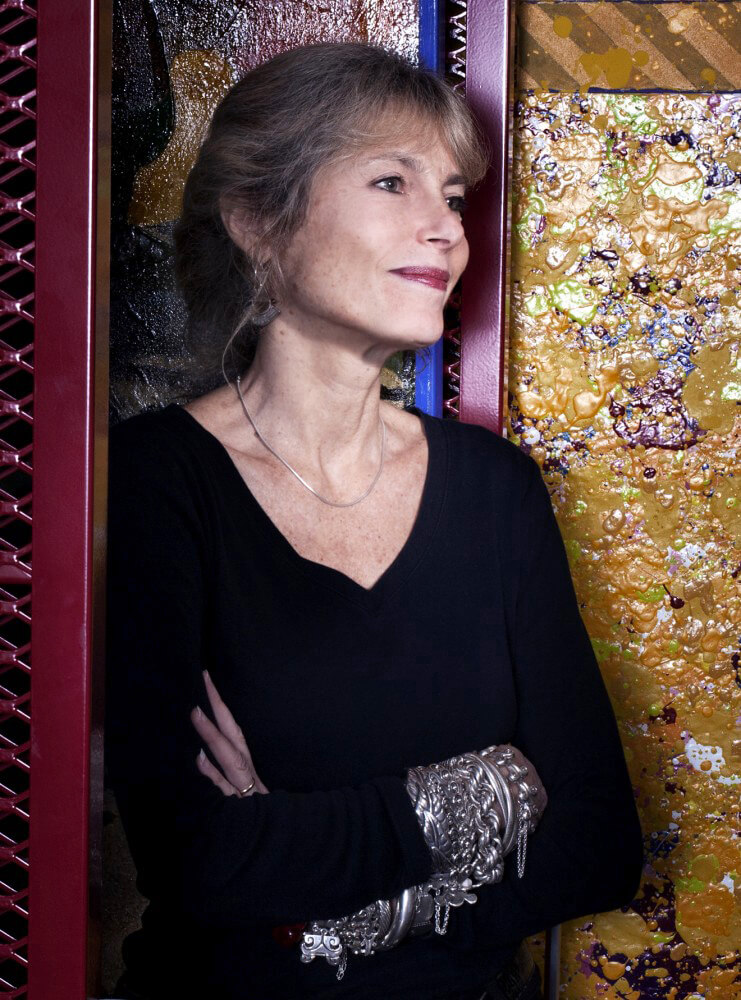
The book’s author, Jo Farb Hernández, Director Emerita of SPACES (Saving and Preserving Arts and Cultural Environments) and Professor Emerita at San José State University, is also a scholar of the work of self-taught artists. Image: Thomas Sanders
Their lack of a shared movement or vocabulary is what makes these contemporary buildings difficult to classify—and useful to architecture. Hernández also seems to be asking who gets to author the built environment, whose experiments become part of architectural history and which forms of making are deemed worthy of preservation. That last question is increasingly material: the Watts Towers have required sustained conservation; Margaret’s Grocery and Market has suffered deterioration, vandalism and structural instability, while the Beer Can House has undergone extensive restoration. Preserving them means retaining a version of architectural history that has largely developed without architects or schools. “The sites themselves challenge and expand our social, cultural and aesthetic norms,” as Hernández writes, opening architecture onto the “remarkable breadth of human creativity in all its exuberance, and in all its spirited and alternative forms”.